


Responding to cell & gene fill-finish challenges and automation scale-up.
13:59 - 26/08/2025 583
Before diving into the technical details of cell and gene therapy manufacturing, it’s worth pausing to reflect on the human stories that have driven this innovation. These therapies aren’t just scientific marvels — they’re changing lives
EN 1822 Standard: Classification and Evaluation of the Latest HEPA H13, H14, and ULPA Filters
Latest 2026 Update on ISO 14644 and TCVN 8664 Standards
Sterile Material Transfer Systems for Isolators/RABS.
English translation: “Why Is 2026 the Boom Time for Cleanroom Investment in Vietnam?”
☰ Table of Contents
- 1. Facing Fill-Finish Challenges and Scaling Up Automation in Cell & Gene Therapy Manufacturing
- 1.1 A shift from a human perspective
- 1.2 Why did 3P Innovation enter this field?
- 1.3 From the lab to scaled manufacturing
- 1.4 Automation: The industry’s next breakthrough
- 1.5 Primary containers and cold-chain challenges
- 1.6 Regulations and advanced engineering design
- 1.7 Specialised solutions to optimise cleanroom space
- 1.8 3P Innovation’s future vision
- 2. Conclusion
Facing Fill-Finish Challenges and Scaling Up Automation in Cell & Gene Therapy Manufacturing
A shift from a human perspective
Imagine a mother desperately searching for life for herself and her children—after cancer has pushed her to the edge. Instead of accepting defeat, she receives CAR‑T cell therapy. Just one month later, the cancer is gone. Or a young boy with a severe motor neuron disease is saved by a single gene infusion, opening a future—thanks to advanced therapies. These stories remind us that cell and gene therapies are not merely science; they are life-saving miracles.
Why did 3P Innovation enter this field?
3P has supported complex pharmaceutical manufacturing challenges such as injection devices and extended-release formulations. As cell and gene therapies became more common, they recognised a familiar pattern: these are transformative therapies, yet manufacturing remains slow, expensive, and not reliable enough. Automation becomes the answer to reach more patients, reduce costs, and improve quality.
From the lab to scaled manufacturing
Most therapies today are developed in laboratories—where controls are less stringent, setups are basic, and environments are not built for commercial production. As manufacturing expands to serve global demand, contamination risk, process variability, and shortages of highly skilled staff become major bottlenecks. Therefore, the industry must transition to closed or semi-closed systems running within aseptic isolators. Although this requires time and investment, it delivers long-term performance—especially for high-value therapies.
Automation: The industry’s next breakthrough
Just as Ford’s assembly line made cars a mainstream product, automation is the major catalyst that will help cell and gene therapies scale. Key benefits include lower cost per treatment, improved consistency, reduced dependency on scarce specialist talent, and faster scale-up.
Primary containers and cold-chain challenges
During fill-finish, there are three main container types:
- Cryovials, used in development stages and for quality-control sampling.
- Bags, often used for autologous therapies but prone to tearing when frozen—typically requiring protective trays.
- Vials, which are more robust, commonly used in allogeneic therapies, and often preferred by operators because they are familiar. 3P develops systems that are not dependent on a single specialised container, enabling flexibility and potential cost savings.
Regulations and advanced engineering design
Cell and gene therapy manufacturing is tightly regulated under global standards such as Annex 1 and 21 CFR Part 11, covering everything from airflow design and line clearance to electronic records and material traceability. At 3P, every detail is executed rigorously: from compact servos with sealed housings, to fully aseptic processing chambers, to small features like polished fasteners, sealed joints, and integrated seals—all aimed at maintaining the highest sterility standards.
Specialised solutions to optimise cleanroom space
Building on its existing engineering strengths, 3P customises its platforms to meet cell and gene therapy requirements:
- A compact vial fill system with integrated gravimetric weighing to control fill accuracy; reduced time between de-capping and stoppering; and an integrated crimper with force feedback—designed to fit inside a biosafety cabinet (BSC).
- A similar approach for cryovials, handled in standard racks, minimising the time from opening to closing to protect cell viability.
- This product line is built-to-stock, helping reduce deployment time—especially critical when deadlines are tight for therapies worth millions of pounds.
At larger scale, 3P also develops a robotic fill-finish solution integrated with an isolator—an end-to-end “equipment + environment” platform described as one of the most compact options available, ideal for cleanrooms with limited space.
3P Innovation’s future vision
3P believes the future of advanced therapies depends heavily on automation—because it not only reduces costs, but also ensures quality, repeatability, and broader patient access. 3P aims to be a strategic partner—not just providing equipment, but offering deep technical support and regulatory understanding to help the industry bring therapies to market. “We don’t just build machines; we make medicines real.”
A message from Anh Khang
Manufacturing cell and gene therapies requires more than science—it demands a comprehensive engineering system, from suitable primary containers and automation to global regulatory compliance. Automation and specialised design are the keys to scaling healing capacity, optimising costs, and improving safety.
 | ANH KHANG CLEANROOM M&E JOINT STOCK COMPANY Hotline: 1900 636 814 - 0902 051 222 Email: info@akme.com.vn Website: akme.com.vn Address: Lot B7 - Xuan Phuong Garden - Phuong Canh - Nam Tu Liem - Hanoi. |

12:05 - 28/11/2019 49486
Cleanroom Design and Construction

14:05 - 11/03/2025 24960
GMP and ISO Standard Cleanroom Construction
14:18 - 11/03/2025 13871
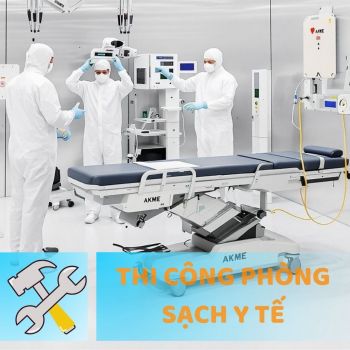
ISO Standard Medical Cleanroom Construction
14:13 - 28/02/2025 25261
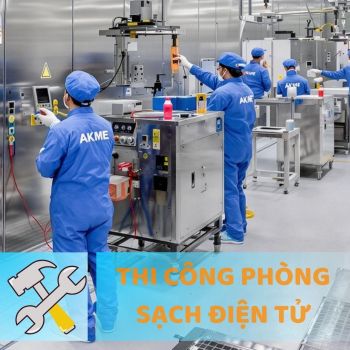
Electronics Cleanroom Construction
16:15 - 18/03/2021 7716
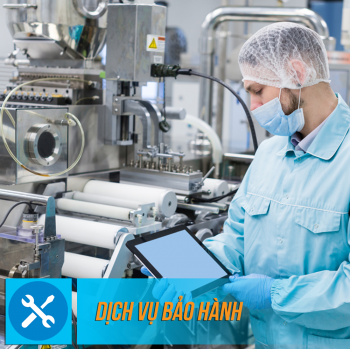
Warranty Service
16:26 - 28/11/2019 21115
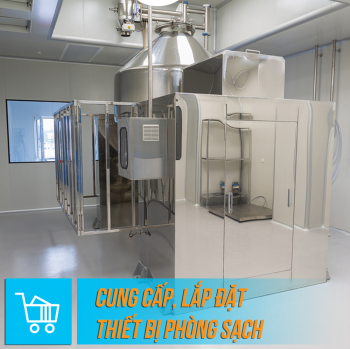
Supply and installation of cleanroom equipment

14:50 - 26/11/2019 7427
Technology Production Line Consulting
16:35 - 19/03/2025 20981