


Advanced therapy medicinal product cleanroom facilities (ATMPs): A roadmap to success.
15:30 - 27/08/2025 652
We are in the midst of a new-generation scientific revolution in personalized therapeutic medicine, yet manufacturing infrastructure design continues to follow an outdated template.
Today’s advances in cell, gene, and tissue therapies demand a rethink of how—and where—cleanroom manufacturing facilities are built, enabling more options for process control and funding governance.
The BMS System in Cleanrooms: A Core Role
What Are DQ, IQ, OQ, and PQ Qualification Documents? Structure, Roles, and a Reference Checklist for Cleanroom Systems
English translation: “Factors That Determine the Performance of Cleanroom Air Filters.”
Sustainable Cleanroom Humidity: The Important Role of Water Quality
☰ Table of Contents
- 1. Roadmap to success for ATMP cleanroom design & build
- 1.1. Introducing the challenges in ATMP manufacturing facilities
- 1.2. ATMPs create new cleanroom design challenges
- 1.3. Lessons from a decade of AES Clean Technology experience
- 1.4. Cleanroom construction approaches: Pros – Cons
- 1.4.1. Traditional stick-built
- 1.4.2. Prefabricated containers
- 1.4.3. Modular cleanrooms
- 1.5. ATMP cleanroom design roadmap – Key steps
- 1.6. The bright future of ATMPs
- 2. Conclusion & shared perspective
Roadmap to success for ATMP cleanroom design & build
1. Introducing the challenges in ATMP manufacturing facilities
We are in the midst of a personalized medicine revolution driven by cell, gene, and tissue therapies, commonly referred to as ATMPs – Advanced Therapy Medicinal Products. Despite remarkable breakthroughs, manufacturing infrastructure still struggles to apply legacy approaches. Current processes have not kept pace with growing demands for control, flexibility, and proximity to the patient point of care in production.
2. ATMPs create new cleanroom design challenges
Autologous therapies require collecting cells from the patient, so cleanroom facilities should be built as close to healthcare sites as possible to improve product quality and reduce logistics risk. Hands-on processing and patient-specific customization make scaling more complex and less practical than mass-production models.
In addition, a key goal for ATMPs is to build small, flexible cleanrooms and widely adopt single-use technology (Single-Use Technology, SUT) — both to reduce the footprint and to protect ownership of the manufacturing process from early stages.
3. Lessons from a decade of AES Clean Technology experience
Over the past 15+ years, AES has delivered numerous purpose-built cleanrooms for ATMPs, including fast-track projects under Operation Warp Speed for COVID-19 vaccine production. From this, they have distilled several cleanroom design and build templates aligned with advanced manufacturing standards.
4. Cleanroom construction approaches: Pros – Cons
1.4.1. Traditional stick-built
- Easy to build with commonly available materials, but tends to absorb moisture and is harder to clean.
- When changes or expansion are needed, costs are high and the risk of impacting sterility is significant.
1.4.2. Prefabricated containers
- Faster installation, with quality control completed before delivery to the site.
- However, it is less flexible when adjustments or expansion are required as the process changes.
1.4.3. Modular cleanrooms
- Manufactured from inorganic materials and finished with cleanable uPVC, offering chemical resistance and low particle generation.
- Enables rapid installation and easy expansion even within very short timeframes (e.g., over a weekend).
- Generates minimal dust during installation, which is fundamentally different from traditional construction.
- However, higher upfront investment can be a barrier for smaller companies.
5. ATMP cleanroom design roadmap – Key steps
To ensure an ATMP cleanroom meets both short-term and long-term needs, a structured roadmap should be followed:
- Build a manufacturing plan: Start with demand forecasting (clinical and commercial), and include factors such as sampling, QC/QA, storage, waste/residuals, revalidation, and logistics.
- Decide “in-house” vs “outsourced”: In-house manufacturing helps protect process confidentiality and can save costs in the long run if volumes are small. A bridging strategy (outsource first, then transfer into a dedicated facility) is also recommended.
- Define the manufacturing process: Create a clear process flow diagram (PFD) and integrate single-use technology to optimize cleanroom design.
- Form cross-functional teams: Bring together experts from manufacturing, development, QA/QC, regulatory/legal, and marketing to ensure proper direction and reduce risk.
- Assess the host facility (existing building): The design should ensure smooth personnel/material flow and allow future cleanroom expansion without disrupting operations.
6. The bright future of ATMPs
While ATMPs have the potential to revolutionize medicine, without the right infrastructure they will remain difficult for patients to access.
Modular approaches are demonstrating clear advantages in reducing costs, accelerating delivery, and improving operational stability. When ATMP developers engage early with professional cleanroom providers, the commercialization journey becomes significantly smoother.
Conclusion & shared perspective
The rapid growth of ATMPs calls for cleanroom design solutions that are flexible, safe, and scalable.
Modular solutions, with benefits such as faster installation, easier expansion, and reduced risk, are viewed as an effective and practical direction.
In addition, clear manufacturing planning, selecting the right make-or-buy strategy, understanding the process thoroughly, cross-functional collaboration, and evaluating the host building are all key success factors.
Once a solid infrastructure foundation is established, ATMPs can become not only the story of the future, but real hope and effective treatment for today.
 | ANH KHANG CLEANROOM MEP JOINT STOCK COMPANY Hotline: 1900 636 814 - 0902 051 222 Email: info@akme.com.vn Website: akme.com.vn Address: Lot B7 - Xuan Phuong Garden - Phuong Canh - Nam Tu Liem - Hanoi. |

12:05 - 28/11/2019 49598
Cleanroom Design and Construction

14:05 - 11/03/2025 25059
GMP and ISO Standard Cleanroom Construction
14:18 - 11/03/2025 13995
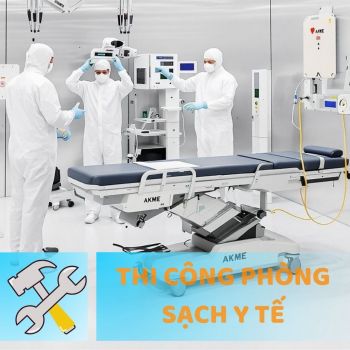
ISO Standard Medical Cleanroom Construction
14:13 - 28/02/2025 25343
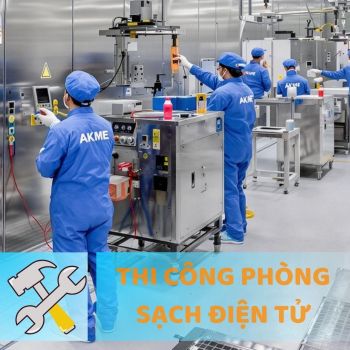
Electronics Cleanroom Construction

16:15 - 18/03/2021 7816
Warranty Service
16:26 - 28/11/2019 21224
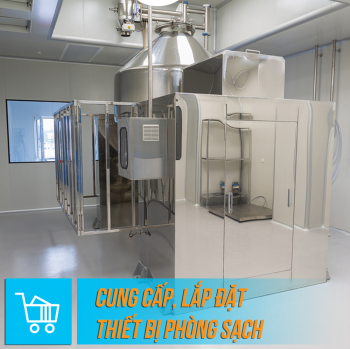
Supply and installation of cleanroom equipment

14:50 - 26/11/2019 7532
Technology Production Line Consulting
16:35 - 19/03/2025 21079