


Common mistakes when performing smoke tests in cleanrooms.
10:56 - 26/08/2025 745
A summary of common mistakes in cleanroom smoke studies and how to fix them.
The BMS System in Cleanrooms: A Core Role
What Are DQ, IQ, OQ, and PQ Qualification Documents? Structure, Roles, and a Reference Checklist for Cleanroom Systems
English translation: “Factors That Determine the Performance of Cleanroom Air Filters.”
Sustainable Cleanroom Humidity: The Important Role of Water Quality
☰ Table of Contents
- 1. Common Mistakes When Performing Smoke Tests in Cleanrooms
- 1.1 Skipping either “At Rest” or “In Operation” conditions
- 1.2 Insufficient simulation of interventions in aseptic environments
- 1.3 Not enough smoke, or unsuitable smoke
- 1.4 Incorrect smoke generation angle
- 1.5 Video recording with too few angles and poor lighting
- 1.6 Not paying enough attention to the human factor
- 1.7 Insufficient or unclear documentation
- 2. Conclusion: Treat Smoke Studies as a Process Study
Common Mistakes When Performing Smoke Tests in Cleanrooms
Skipping either “At Rest” or “In Operation” conditions
Regulatory documents such as Annex 1 emphasise that airflow visualisation should be transparent and include both “At Rest” (no operation) and “In Operation” conditions, to ensure there is no airflow moving from less clean areas into cleaner critical zones. However, many inspection observations and warnings indicate that smoke tests are carried out only in the “At Rest” state, overlooking the crucial impact of real operational activities.
Insufficient simulation of interventions in aseptic environments
A smoke study is not only for observing airflow—it is also a key opportunity to detect gaps between theory and real-world practice. In many cases, activities such as operator movements, working styles, and material transfers are not simulated sufficiently, meaning results do not reflect the true contamination risk.
Not enough smoke, or unsuitable smoke
Some studies use smoke with low persistence, causing the smoke to fade before it reveals the full airflow pattern. On the other hand, overly dense smoke can obscure details. Both situations reduce the qualification value and may be challenged by inspectors.
Incorrect smoke generation angle
Releasing smoke in the same direction as the airflow often leads to misleading results. Technical guidance typically recommends introducing smoke at an angle or perpendicular to the airflow to accurately represent flow structures.
Video recording with too few angles and poor lighting
Recording smoke patterns is critical evidence for inspectors. However, many tests rely on a single camera or poor camera positioning, failing to capture the full smoke path, operator actions, or equipment interactions. Lighting must also be adequate—not too harsh and not too dim—so details are properly recorded.
Not paying enough attention to the human factor
A smoke study is an opportunity to compare theoretical airflow protection with real operational practice: do operators follow the correct procedures, or do behaviours occur that disrupt airflow? Ignoring the human factor prevents identification of important hidden risks.
Insufficient or unclear documentation
Missing test records (videos), missing conclusion reports, or failure to retain original/raw documentation are common deficiencies flagged during inspections. In addition, failing to re-assess previous studies or not implementing corrective actions is also a major issue.
Conclusion: Treat Smoke Studies as a Process Study
A smoke study is not just a static airflow check—it is a comprehensive analysis of operational processes. The greatest value lies in identifying operator habits, pinpointing contamination drivers, and triggering timely corrective actions to ensure aseptic conditions are effectively maintained.
 | ANH KHANG CLEANROOM M&E JOINT STOCK COMPANY Hotline: 1900 636 814 - 0902 051 222 Email: info@akme.com.vn Website: akme.com.vn Address: Lot B7 - Xuan Phuong Garden - Phuong Canh - Nam Tu Liem - Hanoi. |

12:05 - 28/11/2019 49614
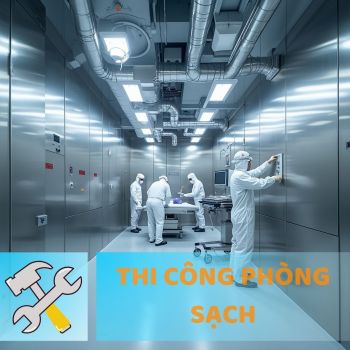
Cleanroom Design and Construction
14:05 - 11/03/2025 25063
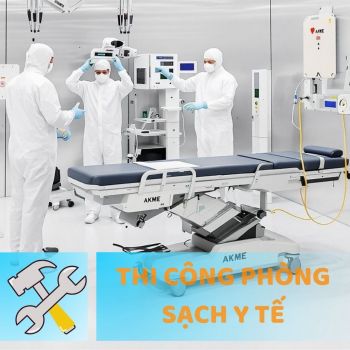
GMP and ISO Standard Cleanroom Construction
14:18 - 11/03/2025 14008
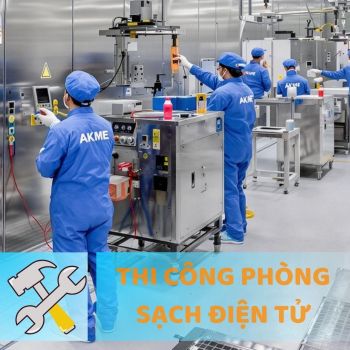
ISO Standard Medical Cleanroom Construction
14:13 - 28/02/2025 25352
Electronics Cleanroom Construction

16:15 - 18/03/2021 7825
Warranty Service
16:26 - 28/11/2019 21238
Supply and installation of cleanroom equipment

14:50 - 26/11/2019 7542
Technology Production Line Consulting
16:35 - 19/03/2025 21087