


What factors affect the lifespan of the HEPA filters in your biosafety cabinet?
09:07 - 25/08/2025 637
The BMS System in Cleanrooms: A Core Role
What Are DQ, IQ, OQ, and PQ Qualification Documents? Structure, Roles, and a Reference Checklist for Cleanroom Systems
English translation: “Factors That Determine the Performance of Cleanroom Air Filters.”
Sustainable Cleanroom Humidity: The Important Role of Water Quality
Factors affecting HEPA filter lifespan in biosafety cabinets (BSCs) and how to extend filter life
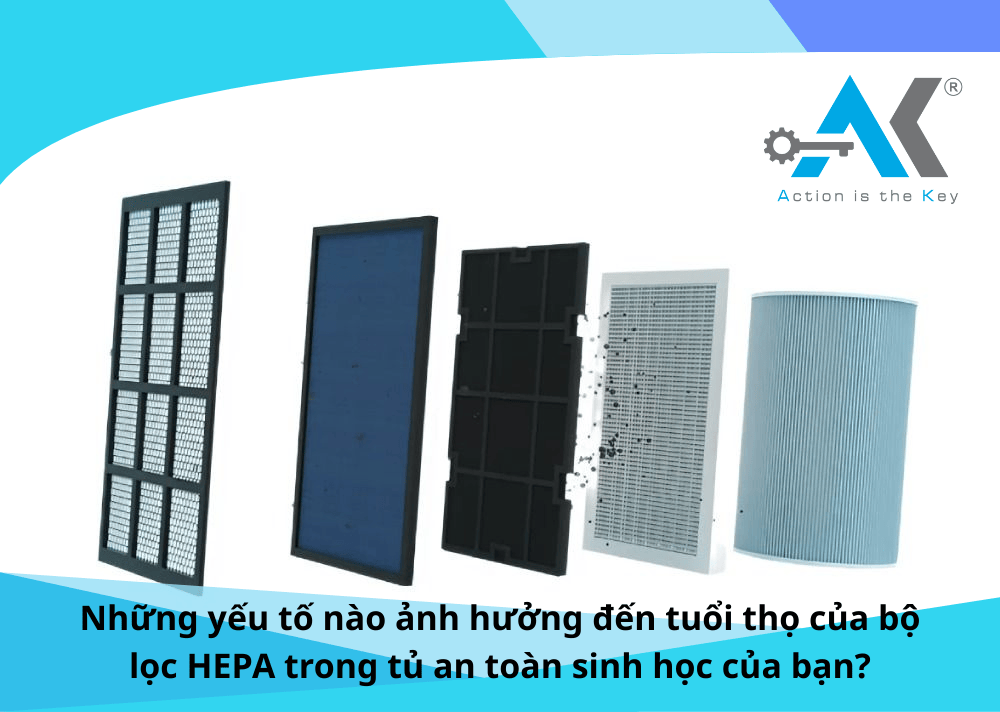
As laboratories increasingly aim to optimise costs and resources, extending the lifespan of replaceable components such as HEPA filters can offer significant savings. Class II biosafety cabinets (BSCs) use fans and filtration media to protect operators from biological hazards while creating a particle-free work area. Fans maintain airflow and create an air barrier at the front opening to keep hazardous materials from escaping, while HEPA filters remove particulates and prevent hazardous material from exiting with the exhaust airflow.
However, there is an inherent tension between the fan and the filter: as the filter captures particles, it gradually becomes loaded and airflow resistance increases. To compensate, the fan must increase speed. Once the fan reaches maximum capacity, the filter is overloaded and must be replaced.
A study presented at the American Biological Safety Association (ABSA) Annual Biosafety Conference (2013) analysed more than 10,000 certification reports from the NIH (2005–2010). The results showed that less than 2% of cabinets required filter replacement per year, suggesting that real-world filter life may exceed the often-cited 15-year recommended lifespan for a BSC (NSF International, 2024).
Usage frequency and standby mode
A survey of 63 users at a university in the United States found that, on average, each BSC operated about 17.6 hours per week, and 43% operated less than 10 hours per week. As a result, HEPA filters may last longer than initially expected.
Standby refers to the state of a cabinet when it is not being used—typically overnight. Some recommendations suggest that continuously running fans on BSCs that are not ducted to an external exhaust can reduce airborne particle levels in the laboratory. In addition, cleaning/decontaminating the interior work surface before and after use remains important for maintaining filtration effectiveness and surrounding air cleanliness.
A sustainability report found that 28% of users leave the cabinet in standby continuously—meaning cabinet run-time can be up to eight times higher than the average. Modern cabinets often offer reduced-flow standby modes, where the sash is closed and airflow rates are lowered. Reduced airflow can extend HEPA filter life compared with running at full operational airflow when the cabinet is not in use.
Working sash/window height
Details about sash height were not fully disclosed in the excerpt. However, sash height may affect particle loading on the filter: the lower the sash, the closer the work area and airflow interaction can be—potentially increasing the particle burden reaching the filter.
Summary of key factors affecting HEPA filter life in BSCs
| Factor | How it affects filter life |
|---|---|
| Usage frequency | Less operating time generally means the filter loads more slowly. |
| Effective standby mode | Reduced-flow standby can extend filter life versus full-speed operation. |
| Working sash/window height | May influence how easily particles are drawn toward the filter and accumulate. |
| Proper cleaning | Reduces particulate and microbial burden that can contribute to filter loading. |
Tips to extend HEPA filter life
Use reduced-flow standby instead of leaving the cabinet running at full operational airflow when not in use.
Thoroughly clean the work area before and after each use to reduce particle loading on the filter.
Track operating hours and optimise run-time to avoid unnecessary continuous operation.
Consider sash/window design and operating height to reduce particle ingress and filter loading.
 | ANH KHANG CLEANROOM M&E JOINT STOCK COMPANY Hotline: 1900 636 814 - 0902 051 222 Email: info@akme.com.vn Website: akme.com.vn Address: Lot B7 - Xuan Phuong Garden - Phuong Canh - Nam Tu Liem - Hanoi. |

12:05 - 28/11/2019 49256
Cleanroom Design and Construction
14:05 - 11/03/2025 24802
GMP and ISO Standard Cleanroom Construction
14:18 - 11/03/2025 13642
ISO Standard Medical Cleanroom Construction

14:13 - 28/02/2025 25092
Electronics Cleanroom Construction

16:15 - 18/03/2021 7516
Warranty Service
16:26 - 28/11/2019 20927
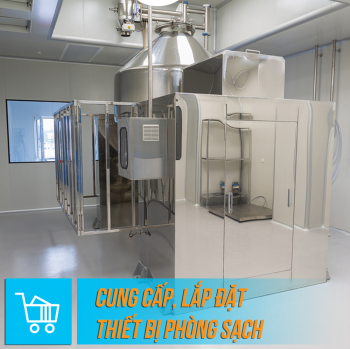
Supply and installation of cleanroom equipment

14:50 - 26/11/2019 7246
Technology Production Line Consulting

16:35 - 19/03/2025 20860