


Breakthrough Innovations in Cleanroom Construction.
16:17 - 06/01/2025 967
Breakthrough innovations in cleanroom construction—from advanced materials and environmental control technologies to automation solutions—are helping elevate the cleanroom industry to a new level.
EN 1822 Standard: Classification and Evaluation of the Latest HEPA H13, H14, and ULPA Filters
Latest 2026 Update on ISO 14644 and TCVN 8664 Standards
Sterile Material Transfer Systems for Isolators/RABS.
English translation: “Why Is 2026 the Boom Time for Cleanroom Investment in Vietnam?”
1. Introduction to the Importance of Cleanrooms
A cleanroom is a space that is strictly controlled in terms of temperature, humidity, pressure, and especially the concentration of airborne particles. It is widely used in industries such as pharmaceuticals, electronics, healthcare, and food production.
Cleanroom construction is not simply about building a clean environment; it must also meet stringent standards such as GMP, ISO 14644, and FDA requirements. To achieve this, advanced technologies and materials have continuously been developed.
In recent years, the rapid growth of the high-tech and healthcare industries has driven the demand for cleanroom construction with increasingly higher standards. Along with this trend, breakthrough innovations in this field have opened up remarkable growth opportunities for businesses.
2. Breakthrough Innovations in Cleanroom Construction
2.1. Advanced Cleanroom Building Materials
One of the most important advances is the development of specialized materials used in cleanroom construction:
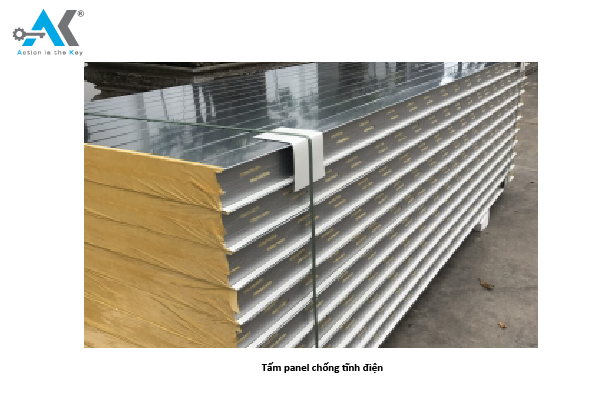
- Antistatic panels:
Coated with an antistatic layer to minimize the risk of damage to sensitive components, these panels also offer antibacterial and fire-resistant properties. - Antibacterial paint:
This type of paint can eliminate bacteria on surfaces, helping maintain a sterile environment. - Recycled materials:
In response to environmental protection trends, recycled materials are designed to minimize waste and pollution.
These materials not only help ensure cleanroom quality but also significantly reduce construction time and costs.
2.2. Advanced Environmental Control Technology
Environmental control is the core element of a cleanroom. Modern technologies have improved both accuracy and efficiency in this process:
- Smart HVAC control systems:
These systems automatically regulate temperature, humidity, and air pressure, ensuring constant stability. - Next-generation HEPA and ULPA filters:
These filters can remove up to 99.999% of ultrafine particles, making them suitable for stringent standards such as GMP and ISO 14644. - Real-time measurement and monitoring systems:
Sensors are installed throughout the cleanroom to continuously monitor environmental conditions, helping detect and address issues immediately.
2.3. Modular Cleanroom Construction Technology
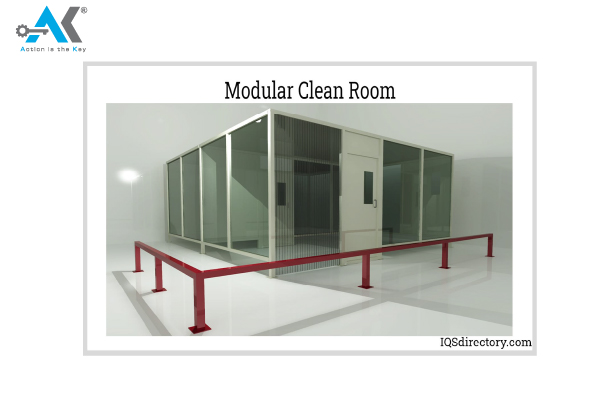
Modular cleanrooms have become a trend in construction thanks to their outstanding advantages:
- Flexibility: Modules can be assembled, relocated, or expanded easily as needed.
- Time-saving: Construction time can be reduced by up to 40% compared with traditional methods.
- Cost optimization: Maintenance and upgrade costs are reduced thanks to standardized design.
Modular cleanrooms are especially useful in fast-growing industries where requirements change continuously.
2.4. Automation Systems in Cleanrooms
Automation is becoming an inevitable trend in both cleanroom construction and operation:
- Construction robots: Robots are used to install air filtration systems, flooring, and panels with high precision.
- Automated monitoring systems: IoT (Internet of Things) sensors are integrated to monitor air quality in real time, providing early warnings when issues occur.
Thanks to automation, the construction process becomes faster and more accurate, reducing dependence on manual labor.
2.5. Application of Artificial Intelligence (AI)
AI has opened up new opportunities in cleanroom design and operation:
- Data analysis: AI helps analyze environmental factors to provide optimal solutions for cleanroom operation.
- 3D simulation: Before construction begins, AI combined with 3D design software can simulate the cleanroom, helping minimize errors and optimize costs.
In addition, AI supports cleanroom operation management by predicting potential issues and enabling preventive solutions in advance.

3. Practical Applications of Cleanroom Technology
Innovations in cleanroom construction have helped improve efficiency across many important industries:
- Pharmaceutical industry: Environmental control technology is used to ensure GMP-compliant production, making medicines and medical products safer.
- Electronics industry: Advanced cleanroom technology is applied to manufacture sensitive components such as semiconductor chips and LED displays.
- Food industry: Cleanroom technology supports sterile processing environments and prevents bacterial growth.
- Healthcare industry: Operating rooms and special care units in hospitals apply cleanroom technology to protect patient health.
4. Benefits of New Innovations in Cleanroom Construction
4.1. Increased Efficiency and Accuracy
- Automation systems and modular technology help reduce construction time and errors.
4.2. Superior Quality Assurance
- Advanced materials and equipment help maintain the cleanroom environment at the highest standards.
4.3. Cost Savings
- Thanks to automation and smart technology, operating and maintenance costs are significantly optimized.
4.4. Environmental Protection
- The use of recycled materials and energy-saving systems helps reduce negative environmental impacts.
4.5. Enhanced Business Competitiveness
- Using advanced cleanroom technology not only helps businesses meet international standards but also enhances credibility and competitiveness in the global market.
5. Future Trends in Cleanroom Technology Development
In the coming years, new technologies are expected to continue shaping the cleanroom construction industry:
- Greater use of AI: AI will not only support operations but may also automate the entire maintenance process.
- Green energy: Renewable energy sources such as solar power will be integrated into HVAC systems to reduce electricity consumption.
- Mobile cleanrooms: Compact cleanroom solutions that can be easily transported and installed in multiple locations.
6. Conclusion
Breakthrough innovations in cleanroom construction have opened a new era for this industry. With the combination of advanced technology, automation, and modern materials, today’s cleanrooms not only meet stringent standards but have also become more efficient and sustainable than ever before.
Stay updated on the next advances in cleanroom construction to seize innovation opportunities for your business.
 | ANH KHANG CLEANROOM M&E JOINT STOCK COMPANY Hotline: 1900 636 814 - 0902 051 222 Email: info@akme.com.vn Website: akme.com.vn Address: Lot B7 - Xuan Phuong Garden - Phuong Canh - Nam Tu Liem - Hanoi. |

12:05 - 28/11/2019 49486
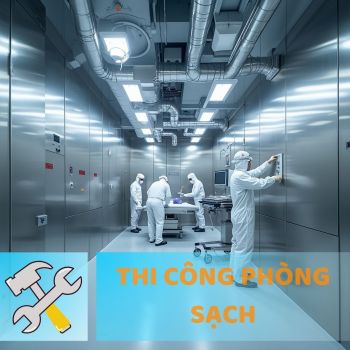
Cleanroom Design and Construction
14:05 - 11/03/2025 24960
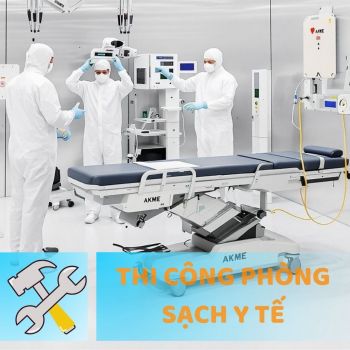
GMP and ISO Standard Cleanroom Construction
14:18 - 11/03/2025 13871
ISO Standard Medical Cleanroom Construction
14:13 - 28/02/2025 25261
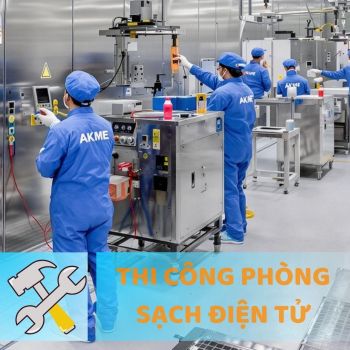
Electronics Cleanroom Construction
16:15 - 18/03/2021 7716
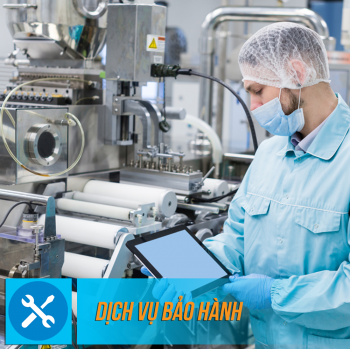
Warranty Service
16:26 - 28/11/2019 21115
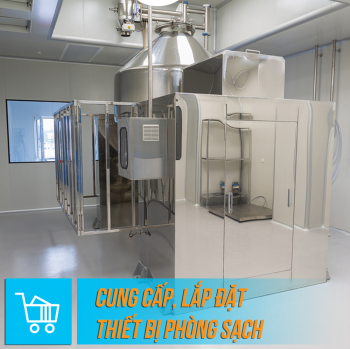
Supply and installation of cleanroom equipment

14:50 - 26/11/2019 7427
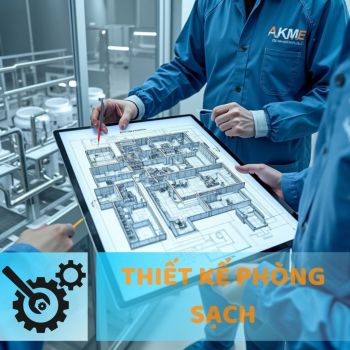
Technology Production Line Consulting
16:35 - 19/03/2025 20981