


English translation: “Why Is 2026 the Boom Time for Cleanroom Investment in Vietnam?”
09:59 - 02/03/2026 684
EN 1822 Standard: Classification and Evaluation of the Latest HEPA H13, H14, and ULPA Filters
Latest 2026 Update on ISO 14644 and TCVN 8664 Standards
Sterile Material Transfer Systems for Isolators/RABS.
Sustainability in cleanrooms.
☰ Article Table of Contents
- 1. Decoding the Industrial Landscape: Why Is 2026 the Golden Time to Invest in Cleanrooms in Vietnam?
- 1.1. The 2026 context: The supply chain race and the landing point of FDI flows
- 1.2. Three key economic sectors that are “hungry” for standardized spaces
- 1.3. The 2026 technology turning point: Stricter standards and the intervention of AI/IoT
- 1.4. Solving the investment equation: What do businesses lose if they move too slowly?
- 1.5. Conclusion: 2026 – The moment to transform
Decoding the Industrial Landscape: Why Is 2026 the Golden Time to Invest in Cleanrooms in Vietnam?
Entering 2026, the global economy is witnessing deep fragmentation, and supply chain restructuring is taking place at an unprecedented pace. In Vietnam, major corporations continuously pouring capital into semiconductors, biotechnology, and pharmaceuticals are creating intense pressure for a complete transformation of the industrial infrastructure. In the face of this wave, cleanroom investment in 2026 is no longer a “nice-to-have” item, but has become a mandatory “must-have” passport to enter the global playing field.
This article directly addresses a central question that every factory owner, investor, and regulator is asking: “Why should businesses invest in cleanrooms starting in 2026, and what will they lose if they move too slowly?”
The 2026 Context: The Supply Chain Race and the Landing Point of FDI Flows
Economic experts regard 2026 as a pivotal year when high-quality foreign investment truly begins to penetrate Vietnam’s core industries. The shift of supply chains from traditional markets to Southeast Asia has moved beyond the exploratory stage and entered the phase of establishing long-term production bases.
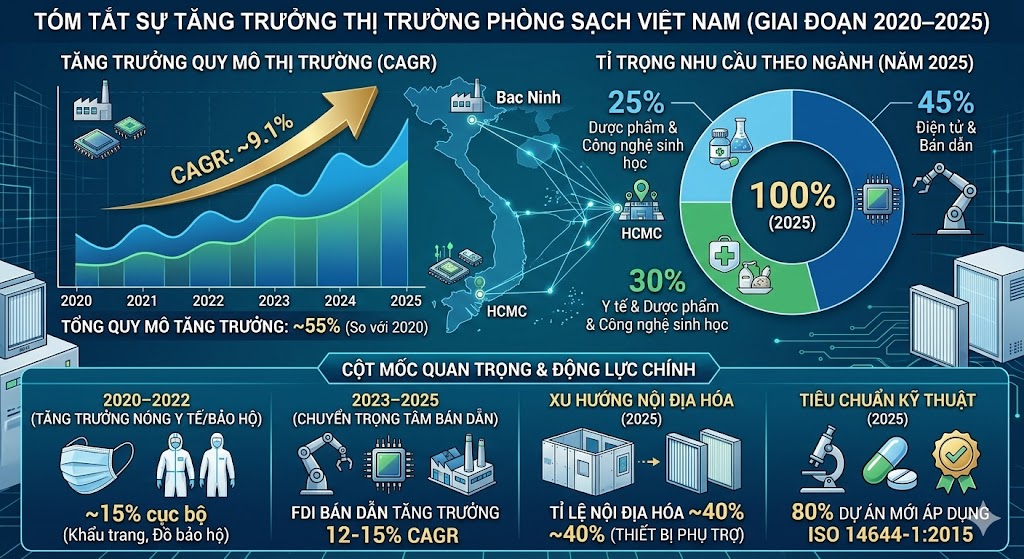
According to macroeconomic reports from the beginning of the year, high-tech FDI inflows into Vietnam continue to maintain strong growth momentum, particularly in processing and manufacturing, semiconductors, and healthcare. When multinational corporations establish bases in Vietnam, they do not only require land or tax incentives; they demand an ecosystem of local suppliers (vendors) that meets international standards.
At this point, the biggest technical barrier between an ordinary factory and one qualified to receive global orders is the production environment. Without a standard-compliant cleanroom, Vietnamese businesses are completely excluded from the bidding lists of major technology players. The year 2026 represents a true “window of opportunity” while new supply chains are still finalizing their lists of long-term strategic partners.
Three Key Economic Sectors That Need Standardized Spaces
The boom of the cleanroom market in Vietnam is not random, but is being driven by real demand from three major industry groups:
A. Semiconductor Industry & Telecommunications Electronics
The year 2026 marks major progress as Vietnam not only performs assembly outsourcing but also begins to participate more deeply in semiconductor chip testing, assembly, and packaging (ATP), as well as microelectronic component manufacturing. Chip manufacturing is one of the most demanding production environments in the world. A dust particle only a few nanometers in size can be enough to destroy an entire chip batch worth millions of dollars. Investing in cleanrooms in 2026 with ultra-clean classifications (Class 1, Class 10) is a prerequisite for the local semiconductor ecosystem to take shape and grow.
B. Pharmaceuticals, Healthcare & Biotechnology
After the pandemic and global healthcare disruptions, health security has become a national priority. Vietnam’s reception of high-tech vaccine production lines and robotic applications, expected to be deployed in the coming years, requires extremely strict laboratory infrastructure and production areas. Pharmaceutical plants are now required to upgrade to GMP-EU or cGMP (U.S.) standards instead of stopping at GMP-WHO as before. Sterile filling and packaging operations demand cleanroom systems that operate flawlessly 24/7.
C. Dietary Supplements & High-Tech Agriculture
Both domestic and export markets are becoming increasingly strict about chemical residues and microorganisms. To export processed agricultural products and functional foods to demanding markets such as the U.S., EU, and Japan, processing plants are rapidly building cleanrooms to achieve absolute control over bacteria and mold during packaging, thereby extending shelf life without relying on chemical preservatives.

The 2026 Technology Turning Point: Stricter Standards and the Intervention of AI/IoT
The market in 2026 demands not only quantity but also a qualitative upgrade in cleanroom construction and operation.
In terms of design and construction standards:
Compliance with international cleanroom standards is no longer just a labeling exercise. Inspection bodies and international partners will review everything from the foundational design stage. For example, core standards such as ISO 14644-4:2001, which governs cleanroom design, construction, and start-up, are used as mandatory benchmarks to assess the ability to control airflow, pressure differentials, and surface materials. Any error in the initial design stage can later lead to enormous operating costs or cross-contamination risks.
In terms of operating technology (Smart Cleanroom):
The new generation of cleanrooms in 2026 is seeing deep integration of IoT (Internet of Things), sensors, and AI.
- Sensor & IoT: Sensor systems that measure particle concentration, temperature, humidity, and pressure differential are updated in real time to the central control room.
- AI Analytics: Artificial intelligence analyzes data from HVAC systems to optimize energy consumption, solving the problem of electricity costs that can consume billions of VND per month in cleanrooms, and provides predictive maintenance alerts before HEPA/ULPA filters actually become clogged.
Solving the Investment Equation: What Do Businesses Lose If They Move Too Slowly?
Although the potential is enormous, making the investment decision has never been easy. We need to look objectively at both the advantages and the core challenges.
First-mover advantage
- Capturing Tier-1 vendor market share: FDI enterprises tend to retain the same supply partners once those partners meet the required standards from the beginning. Companies that already have internationally compliant cleanroom infrastructure in 2026 will immediately be able to secure long-term contracts and become indispensable links in the supply chain.
- Optimizing long-term cost structure: Investing in modern technology from the start helps minimize product losses caused by contamination-related defects, thereby improving profit margins.
Challenges to face
- Huge capital expenditure (CAPEX): Building a cleanroom requires a budget many times larger than that of a conventional factory. Specialized materials such as antibacterial panels, electrostatic epoxy coatings, HVAC systems, and filtration equipment all come at high cost.
- Heavy operating expenditure (OPEX): Air conditioning and air handling systems running continuously 24/7 consume enormous amounts of electricity.
- Human resources and SOP bottlenecks: No matter how modern a cleanroom is, it becomes meaningless if people fail to follow the rules. The biggest challenge for Vietnamese factories today is establishing and strictly complying with Standard Operating Procedures (SOPs), from gowning and material flow routing to incident reporting procedures. The shortage of cleanroom operation and maintenance engineers with deep knowledge of microbiology and mechanical-electrical systems remains a major pain point.
Answering the central question: What is lost if businesses delay?
If cleanroom investment in 2026 is postponed, businesses will lose a once-in-a-generation “window of opportunity.” Once FDI supply chains finish locking in their partner lists over the next one to two years, the barriers to market entry will become much higher. Latecomers will be stuck in low-value outsourcing segments, forced to compete harshly on low prices, and may never be able to move up into high-tech component production or specialty pharmaceuticals. Today’s hesitation will be paid for with lost market share to competitors that have already prepared the necessary infrastructure.

2026 – The Moment to Transform
In summary, the convergence of three factors, high-tech FDI inflows, the increasing strictness of global supply chains, and the internal demand of billion-dollar industries, has turned 2026 into a breakout year for the cleanroom market in Vietnam.
Investing in cleanrooms in 2026 is not merely a basic construction expense; it is a strategic investment in “reliability,” the value that international corporations are searching for most in Vietnamese partners. Faced with this opportunity, factory owners and investors need a vision that goes beyond short-term cost calculations and should confidently cooperate with truly capable design and construction consultants to build infrastructure and完善 processes. The “window of opportunity” is opening, and those who prepare most thoroughly will be the ones to reshape Vietnam’s industrial map over the next decade.
 | ANH KHANG CLEANROOM M&E JOINT STOCK COMPANY Hotline: 1900 636 814 - 0902 051 222 Email: info@akme.com.vn Website: akme.com.vn Address: Lot B7 - Xuan Phuong Garden - Trinh Van Bo Street - Xuan Phuong Ward - Hanoi |

12:05 - 28/11/2019 49239
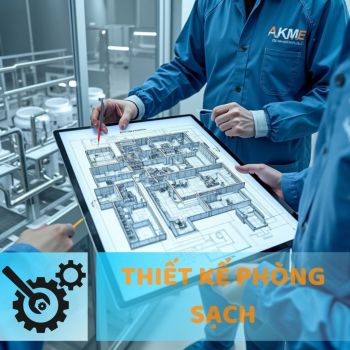
Cleanroom Design and Construction
14:05 - 11/03/2025 24795
GMP and ISO Standard Cleanroom Construction
14:18 - 11/03/2025 13629
ISO Standard Medical Cleanroom Construction
14:13 - 28/02/2025 25080
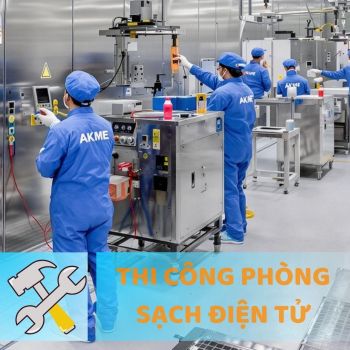
Electronics Cleanroom Construction

16:15 - 18/03/2021 7504
Warranty Service
16:26 - 28/11/2019 20905
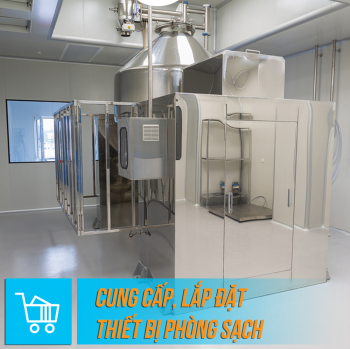
Supply and installation of cleanroom equipment

14:50 - 26/11/2019 7233
Technology Production Line Consulting
16:35 - 19/03/2025 20859