

What Is a VAV System? Structure, Operating Principle, and Applications in HVAC
14:08 - 09/04/2026 869
Discover the structure and operating principle of the VAV (Variable Air Volume) system. An exclusive solution from Anh Khang Cleanroom for pressure differential control and energy savings.
Position air return grilles to optimise airflow control in the cleanroom.
Innovating airlock technology – off-site fabrication and field assembly to ensure a seamless transition when entering and exiting sterile environments.
Decoding Raised Floors in Cleanrooms for Electronics Manufacturing Plants
The importance of cleanroom lighting
Operating air conditioning systems for large-scale factories always comes with enormous challenges in electricity costs. Many investors today are still struggling with systems that continue running at maximum capacity even though cooling demand varies constantly across different areas.
If businesses continue maintaining the traditional fixed-air-volume supply method, they will not only waste billions of VND in annual OPEX (operating expenses), but also face the risk of disrupting the pressure cascade in cleanrooms. This lack of control can lead to cross-contamination, causing the facility to fail to meet stringent standards such as ISO 14644 or TCVN 8664.
To solve this problem thoroughly, the VAV system (Variable Air Volume) is the key. With hands-on construction experience, Anh Khang Cleanroom is proud to deliver synchronized VAV integration solutions that help factories precisely control the environment, optimize energy use, and comprehensively protect product quality.
What Is a VAV (Variable Air Volume) System?
A VAV system (short for Variable Air Volume) is an intelligent air conditioning solution. The core principle of VAV is to vary the airflow rate supplied to a space based on the actual thermal load, while still maintaining a stable supply air temperature.
Completely different from conventional systems, a VAV system automatically detects when a room is crowded or when machinery is generating more heat, then increases the airflow accordingly, and automatically reduces the airflow when the space is less occupied. This flexibility directly reduces the load on chillers and supply fans, bringing outstanding energy-saving efficiency to industrial facilities.
Structure and Operating Principle of a VAV Box
At the heart of the system are the VAV Boxes—terminal devices that regulate airflow for each separate zone. A technically standard unit typically includes four main components:
- Sensor: Continuously monitors actual parameters such as room temperature or duct pressure and sends data back to the control center.
- Controller: Receives signals from the sensor, analyzes them, and compares them with the standard set-point.
- Actuator: The execution mechanism that receives commands from the controller to perform mechanical actions.
- Damper: Opens or closes to change the duct cross-section, thereby precisely regulating the airflow passing through.
Operating principle: When the thermal load changes, the sensor detects the difference and reports it to the controller. Immediately, the actuator adjusts the damper to open wider or close down. In this way, the HVAC refrigeration system always responds precisely to cooling demand without excess capacity.

Core Applications of VAV in Standard-Compliant Cleanroom Construction
In the field of cleanroom M&E, a VAV system is not merely used for cooling, but serves as a mission-critical tool for controlling the production environment.
1. Maintaining an Absolute Pressure Differential Map
Cleanrooms compliant with ISO 14644 and GMP must maintain positive pressure (or negative pressure depending on the application) to prevent dust and microorganisms from entering. As HEPA filters gradually become clogged over time, airflow decreases. At that point, the VAV system automatically adjusts the damper opening to compensate for the airflow, ensuring absolutely stable room pressure without manual intervention.
Explore Anh Khang Cleanroom’s cleanroom design and construction services to learn more about standard pressure cascade structures.
2. Optimizing Energy Consumption (OPEX)
During maintenance periods or outside working hours, the VAV Box automatically reduces the airflow rate to the minimum level, helping reduce the load on the central cooling system and significantly lowering monthly electricity bills for investors.
3. Independent Zone Control
The system allows the factory space to be divided into multiple control zones. Areas with high heat generation and corridor areas with lower loads will receive different airflow volumes, preventing wasted energy across zones.
Learn more about operating procedures and regular cleanroom maintenance to extend the lifespan of VAV Boxes.
.png)
Anh Khang’s High-Level HVAC Implementation Capability
A VAV system can only truly maximize its effectiveness when engineers calculate and integrate it synchronously with the AHU, chiller, duct system, and central BMS controller. Even a small mistake in thermal load calculation or selecting the wrong airflow range can destabilize temperature and humidity and break cleanroom standards.
Positioned as a leading expert, Anh Khang Cleanroom confidently delivers a comprehensive solution package: from energy simulation calculations and controller integration to M&E construction and internationally standardized TAB (Testing - Adjusting - Balancing). We do not simply supply equipment; we create technically refined systems that operate durably and optimize long-term profitability for every industrial project of our partners.
 | ANH KHANG CLEANROOM M&E JOINT STOCK COMPANY Hotline: 1900 636 814 - 0902 051 222 Email: info@akme.com.vn Website: akme.com.vn Address: Lot B7 - Xuan Phuong Garden - Trinh Van Bo Street - Xuan Phuong Ward - Hanoi |

12:05 - 28/11/2019 49372
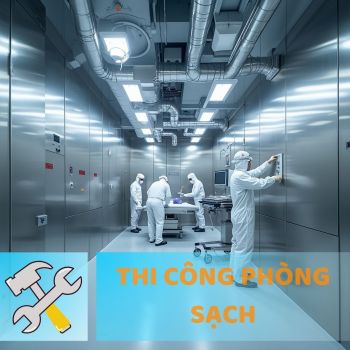
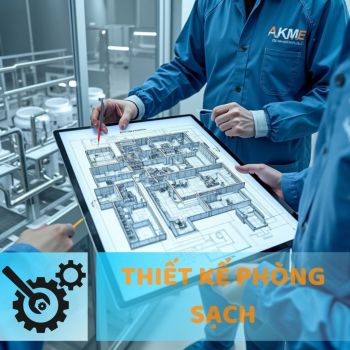
Cleanroom Design and Construction
14:05 - 11/03/2025 24891
GMP and ISO Standard Cleanroom Construction
14:18 - 11/03/2025 13772
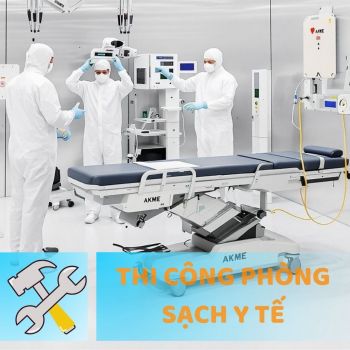
ISO Standard Medical Cleanroom Construction
14:13 - 28/02/2025 25190
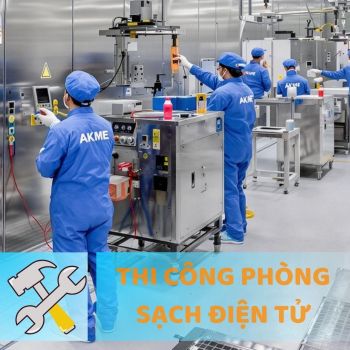
Electronics Cleanroom Construction
16:15 - 18/03/2021 7635
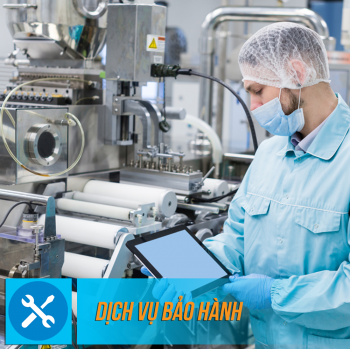
Warranty Service
16:26 - 28/11/2019 21034
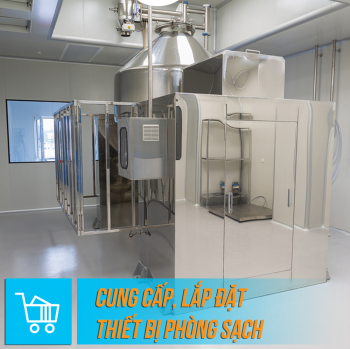
Supply and installation of cleanroom equipment

14:50 - 26/11/2019 7359
Technology Production Line Consulting
16:35 - 19/03/2025 20923