

The Future of Robotics and Automation Technology in Cleanroom Cleaning Processes
09:16 - 08/04/2026 510
Latest 2026 Update on ISO 14644 and TCVN 8664 Standards
Sterile Material Transfer Systems for Isolators/RABS.
English translation: “Why Is 2026 the Boom Time for Cleanroom Investment in Vietnam?”
Sustainability in cleanrooms.
The Future of Robotics and Automation Technology in Cleanroom Cleaning Processes
Maintaining strict sterile standards is a mission-critical requirement for high-tech industries such as pharmaceutical manufacturing, food processing, and semiconductor production. The challenge lies not only in complying with routine cleaning procedures, but in preventing every possible contamination risk, no matter how small, that could compromise product integrity.
Amid growing pressure from international standards, labor shortages, and the risk of human error, businesses are being forced to seek new approaches. From a professional perspective, Anh Khang Cleanroom will help you analyze how automation technologies and robotics are reshaping future cleanroom control, maintenance, and cleaning strategies.
Optimizing Costs and Minimizing Downtime
Whenever a contamination incident occurs, production lines must be temporarily shut down, leading to massive financial losses, especially in large-scale cleanroom systems. Therefore, transitioning to smart cleaning solutions is the key to reducing interruptions and optimizing operating costs.
Today, personnel training is being strongly supported by virtual reality (VR) technology, allowing technicians to become familiar with standardized cleaning procedures in a simulated environment. Combined with smart ergonomic devices, operators can receive real-time guidance to ensure that no critical area is overlooked.
.jpg)
Proactively Adapting to Contamination Control Standards
Airborne particle control has always been a core challenge. According to ISO 14644 standards and Good Manufacturing Practice (GMP) systems, the quantity and concentration of airborne particles must be kept below permitted limits. However, instead of simply complying in a passive manner, Anh Khang Cleanroom always recommends that factories adopt a proactive monitoring approach.
Real-time particle counting sensor systems are now being integrated directly into modern cleaning workflows. By digitizing all validation data, manufacturing facilities can stay one step ahead of regulatory changes and ensure that airborne particle concentrations consistently remain within required standards.
Eliminating Manual Methods and Preventing Cross-Contamination
Traditional manual floor cleaning methods are not only time-consuming but also create inconsistent cleaning quality, increasing the risk of cross-contamination. To address this issue, the world is witnessing the emergence of a new generation of battery-powered cleanroom cleaning machines.
These mechanical systems are equipped with advanced multi-layer ULPA 15 air filters, capable of capturing up to 99.999% of particles as small as 0.1 microns. Instead of using cumbersome cables that disrupt static airflow, swappable battery technology allows the equipment to operate continuously. In addition, eliminating single-use wipes also contributes to a company’s sustainable development goals.
.jpg)
Controlling Risks Caused by Human Factors
Studies indicate that around 80% of contamination causes in controlled environments originate from humans. The fewer people entering and exiting sterile areas, the higher the level of safety.
This is where autonomous robots and automated cleaning solutions demonstrate their value. Machines can be programmed to perform cleaning tasks on fixed schedules without direct supervision, helping production processes continue seamlessly. Of course, in buffer zones such as airlocks or changing rooms, traditional protective measures such as air showers, automated disinfection systems, and sticky mats still serve as the essential first barrier to isolate contamination sources before personnel enter the core area.
Addressing the Shortage of Skilled Personnel
Cleanroom maintenance and cleaning work require physical endurance, meticulous attention to detail, and the ability to work under the pressure of specialized protective garments. As the industry faces a shortage of skilled labor, technology becomes the bridge. Deploying intuitive digital learning systems, as well as applying collaborative robots (Cobots) to support cleaning staff, not only reduces physical strain but also maintains consistency in cleaning standards.
.jpg)
Anh Khang Accompanies You in HVAC and Cleanroom Solutions
The cleanroom industry is preparing to enter a new era, where artificial intelligence (AI) can predict contamination levels in advance, autonomous robots can handle complex cleaning tasks, and self-antimicrobial surface materials become the common standard. Early adoption of these technologies will create a significant competitive advantage for any business.
As an expert with deep knowledge of air systems and contamination control standards, Anh Khang Cleanroom is proud to deliver the most comprehensive cleanroom design, construction, and optimization solutions. At every level, from selecting advanced environmental treatment technologies to completing ISO-compliant infrastructure, Anh Khang Cleanroom is always ready to stand beside businesses and help create safe, modern, and sustainable production environments. Every project is carried out with expertise and dedication, because your success is the true measure of our value.
 | ANH KHANG CLEANROOM M&E JOINT STOCK COMPANY Hotline: 1900 636 814 - 0902 051 222 Email: info@akme.com.vn Website: akme.com.vn Address: Lot B7 - Xuan Phuong Garden - Trinh Van Bo Street - Xuan Phuong Ward - Hanoi |

12:05 - 28/11/2019 49239
Cleanroom Design and Construction
14:05 - 11/03/2025 24795
GMP and ISO Standard Cleanroom Construction
14:18 - 11/03/2025 13629
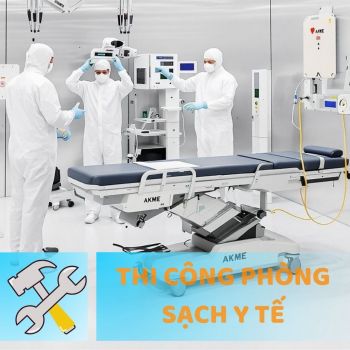
ISO Standard Medical Cleanroom Construction
14:13 - 28/02/2025 25080
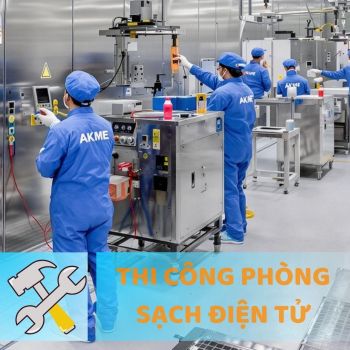
Electronics Cleanroom Construction
16:15 - 18/03/2021 7504
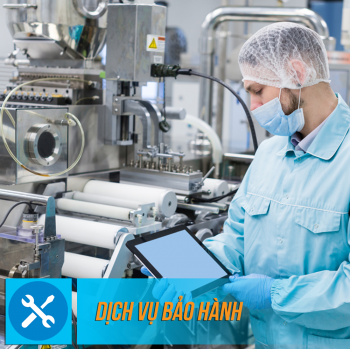
Warranty Service
16:26 - 28/11/2019 20905
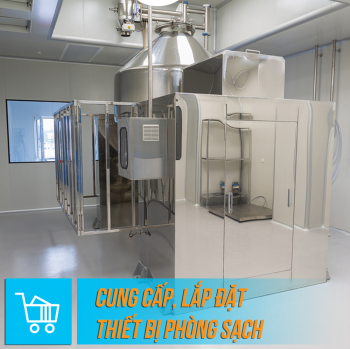
Supply and installation of cleanroom equipment

14:50 - 26/11/2019 7233
Technology Production Line Consulting
16:35 - 19/03/2025 20859