

Sustainability in cleanrooms.
15:55 - 24/11/2025 867
EN 1822 Standard: Classification and Evaluation of the Latest HEPA H13, H14, and ULPA Filters
Latest 2026 Update on ISO 14644 and TCVN 8664 Standards
Sterile Material Transfer Systems for Isolators/RABS.
English translation: “Why Is 2026 the Boom Time for Cleanroom Investment in Vietnam?”
☰ Table of Contents
- 1. Introduction: Why Does Sustainability Matter in the Cleanroom Industry?
- 2. Understanding Energy Consumption in Cleanrooms
- 2.1. Why Do Cleanrooms Consume So Much Energy?
- 2.2. The Impact of Energy Use on Carbon Emissions
- 3. Legal Context: New Regulations in Vietnam
- 3.1. National Green Growth Strategy
- 3.2. The 2021 Law on Environmental Protection and Related Regulations
- 3.3. GMP and TCVN Standards
- 4. The Conflict Between Quality Control and Sustainability
- 4.1. An Unavoidable Loop?
- 4.2. The Solution: Smart Design and Energy-Saving Technologies
- 5. Emissions Measurement and Reporting
- 5.1. The Three Emission Scopes
- 6. The Next Step: From Theory to Practice
- 6.1. Don’t Wait for Perfection
- 7. Beyond Carbon: Holistic Sustainability
- 7.1. What Is Sustainability?
- 7.2. Sustainability Assessment: EcoVadis and Other Frameworks
- 8. The Benefits of Acting Now
- 9. Real-World Examples from Vietnam
- 10. Choosing the Right Partner
- 11. Conclusion: Start Your Journey Today
Why Does Sustainability Matter in the Cleanroom Industry?
Vietnam’s pharmaceutical industry is going through an important period of transformation. With export demand continuing to rise and international standards becoming increasingly strict, pharmaceutical manufacturers must not only ensure product quality but also demonstrate their commitment to sustainable development. This is especially true for cleanrooms—the most critical spaces in pharmaceutical production.
A cleanroom is the heart of any pharmaceutical manufacturing facility. It is where products are protected from contamination and harmful elements, ensuring sterility and safety for consumers. However, maintaining these control standards requires an enormous amount of energy—and the environmental cost is also significant. This raises an important question: How can companies meet strict quality control requirements while also minimizing their environmental impact? This is the biggest challenge facing Vietnam’s cleanroom industry today.
Understanding Energy Consumption in Cleanrooms
Why Do Cleanrooms Consume So Much Energy?
A typical pharmaceutical cleanroom must maintain highly specific conditions. First, the HVAC (Heating, Ventilation, and Air Conditioning) system must operate 24/7 at high capacity to ensure continuous airflow. At the same time, 100% of the air must pass through ultra-fine HEPA filters to remove airborne particles that could cause contamination. Temperature and humidity must be controlled with precision—typically within ±2°C and ±5% relative humidity—which is far more demanding than in ordinary spaces. In addition, cleanrooms require strong lighting for workers and must maintain positive pressure to prevent dirty air from entering from outside.
All of these requirements—while absolutely necessary—consume energy at a very high rate. According to industry estimates, an ISO Class 5 cleanroom (the highest standard commonly used in pharmaceutical manufacturing) may consume 20 to 50 times more energy than a normal office building of the same size. These figures are not abstract—they have major practical implications for a company’s monthly electricity bills and, more importantly, for its environmental impact.
The Impact of Energy Use on Carbon Emissions
In Vietnam, most electricity still comes from coal-fired power plants and other fossil fuel sources. This means that every kWh of electricity used in a cleanroom corresponds to a certain amount of CO2 released into the atmosphere. The issue becomes even clearer when we recognize that a pharmaceutical production cleanroom in Vietnam may emit between 500 and 2,000 tons of CO2 equivalent per year—a significant figure for a single manufacturing facility. To put this in simple terms, that is comparable to the emissions from operating hundreds of cars at the same time. To understand the full scale of the issue, we need to look at the new regulations and policies the government is introducing to address it.
Legal Context: New Regulations in Vietnam
National Green Growth Strategy
In recent years, the Vietnamese Government has taken decisive steps to reduce carbon emissions. The National Green Growth Strategy (2021–2030) sets out clear and specific goals. Under this strategy, Vietnam has committed to reducing greenhouse gas emissions per unit of GDP by 15% compared with 2014 levels, increasing renewable energy to 15–20% of total energy supply, and achieving carbon neutrality by 2050. These targets are not just lofty ideals—they are being translated into real laws and regulations that companies must comply with.
The 2021 Law on Environmental Protection and Related Regulations
The revised Law on Environmental Protection 2021, which took effect in January 2022, significantly strengthened requirements for manufacturing facilities. One of the most important changes is the mandatory requirement for carbon emissions reporting. Facilities with annual emissions of 3,000 tons of CO2 or more (or energy consumption of 1,000 tons of oil equivalent) must prepare detailed greenhouse gas inventory and emissions management reports. Current figures show that 2,166 industrial facilities are now required to comply with this obligation—and that number is continuing to rise, with 254 new facilities added compared with the 2022 list.
In addition to emissions reporting, the law also requires facilities to use the best available technologies to control emissions. For cleanrooms, this means that improving energy efficiency is no longer optional—it is becoming a legal requirement. Furthermore, the law requires facilities to reduce waste, reuse materials, and recycle wherever possible. For cleanrooms, this directly affects packaging choices, filter handling, and overall waste management.
GMP and TCVN Standards
In Vietnam, all pharmaceutical manufacturing facilities must comply with GMP (Good Manufacturing Practice) standards in accordance with WHO GMP or GMP-ASEAN requirements. At the same time, TCVN 8664:2011 (equivalent to ISO 14644) defines cleanroom classes from ISO 1 to ISO 9 based on airborne particle concentration. It is important to note that these standards do not set specific sustainability requirements—they focus on quality control and sterility assurance. However, new environmental regulations are now requiring companies to reduce emissions. The tension between these two demands creates a practical challenge that companies must address.
The Conflict Between Quality Control and Sustainability
An Unavoidable Loop?
This is the core issue facing the cleanroom industry. To ensure product safety—which is unquestionably essential—companies must consume large amounts of energy. But to reduce carbon emissions—which is an increasingly strict legal requirement—they must lower energy consumption. These two requirements may appear to be in direct conflict, creating a paradox that leaves many companies feeling stuck. Fortunately, the situation is not hopeless. In fact, there is a middle path—one that forward-looking companies are beginning to explore.
The Solution: Smart Design and Energy-Saving Technologies
Instead of accepting that sustainability and quality must always be traded off against one another, leading companies are redesigning the way cleanrooms are built and operated. High-efficiency HVAC systems with inverter motors, adaptive compressors, and intelligent airflow controls can reduce energy consumption by 20–30% while still maintaining high quality standards. The use of optimized insulation materials can reduce heat loss by 15–25%, and when combined with smart architectural design, total energy use can be reduced significantly.
The cost of solar panels has dropped rapidly in recent years, making renewable energy systems increasingly financially viable. A 500m² cleanroom can potentially source 30–40% of its energy from solar power with a reasonable level of investment. Replacing fluorescent lamps with LED lighting not only saves energy but also reduces waste and extends the lifespan of the lighting system.
Anh Khang Cleanroom is one example of a cleanroom company that understands these challenges well. With experience building hundreds of cleanrooms in Vietnam, they integrate energy-saving technologies into the original design rather than treating them as an afterthought. This approach not only helps customers comply with current regulations but also prepares them for stricter environmental requirements in the future.
Emissions Measurement and Reporting
The Three Emission Scopes
To understand the environmental impact of a cleanroom, companies need to classify emissions into three different scopes. Scope 1 includes direct emissions from sources owned or controlled by the company, such as natural gas boilers or company vehicles. For cleanrooms, Scope 1 is usually only a small portion because cleanrooms mainly rely on electricity. Scope 2, on the other hand, is usually the largest share. It includes all CO2 emitted in the production of the electricity, heat, or steam that the company purchases. In Vietnam, where most electricity still comes from coal and fossil fuels, Scope 2 emissions are very high.
Scope 3 includes all other emissions—from the production of cleanroom components and materials to transportation and waste treatment. Scope 3 often accounts for about 70–90% of a facility’s total emissions. Interestingly, although Scope 3 is the largest category, it is also the area where companies may have the biggest impact at the lowest cost. Why? Because it often starts with simple discussions. If a cleanroom company asks its suppliers to reduce their carbon emissions, those suppliers may use more renewable energy, improve manufacturing efficiency, or choose raw materials with a lower carbon footprint. These changes do not require major investment from the cleanroom company—only meaningful discussion during annual contract negotiations. But the results can be reductions of hundreds or even thousands of tons of CO2. Anh Khang Cleanroom takes a proactive approach in this area by working with suppliers to ensure that the components and materials used in their cleanrooms are produced with the lowest possible carbon footprint.
The Next Step: From Theory to Practice
Don’t Wait for Perfection
A common mistake made by cleanroom companies is waiting for the “perfect calculation” before taking any action. They want a complete Life Cycle Assessment (LCA) or a third-party verified Product Environmental Footprint (PEF). The problem is that these assessments take a long time, are expensive, and are often not entirely precise. They depend on many assumptions, and the results can vary depending on who performs the assessment.
While waiting for perfection, the opportunity to reduce emissions slips away. Cleanroom companies should begin acting now with high-impact measures. Improving energy efficiency is the first step and often offers the highest ROI. Companies can replace old fans and compressors with high-efficiency models, install intelligent monitoring systems to optimize airflow, or improve insulation. The investment may range from several hundred million to several billion VND depending on cleanroom size, but it can reduce energy consumption by 20–40%, with a payback period of 3–5 years.
Switching to renewable energy is also a practical option. Solar power is no longer prohibitively expensive in Vietnam. With government support through FiT programs and preferential financing, installing solar systems on rooftops or surrounding land is becoming increasingly feasible. Costs may range from 1,500–2,500 USD/kWp, electricity bills may be reduced by 30–50%, and the payback period is typically 5–7 years.
Packaging optimization is another area that companies often overlook. Product bags and packaging make up a significant portion of Scope 3 emissions. Companies can use recycled or bio-based packaging, reduce packaging thickness while maintaining product protection, or choose suppliers that use renewable energy. In some cases, the cost impact may be neutral—or even positive if the company selects less expensive materials—while still significantly lowering Scope 3 emissions.
Transportation, warehousing, and logistics also represent a meaningful share of emissions. Companies can choose closer suppliers to reduce transportation distances, use greener transport modes, or optimize delivery routes. Finally, developing a circular economy approach can turn uncontaminated waste into a valuable resource. Companies can sort waste at the source, connect with other businesses that can use those materials, or seek financial support through the government’s EPR programs.
Beyond Carbon: Holistic Sustainability
What Is Sustainability?
Sustainability is not only about carbon. It also includes ethical labor practices, ensuring that everyone working throughout the supply chain is treated fairly and safely. Human health is also essential—companies must ensure that products do not cause harm and that processes do not release harmful substances. Responsible sourcing means choosing suppliers with genuine sustainability commitments, not just promises on paper. Most importantly, companies must operate transparently and remain accountable to stakeholders.
Sustainability Assessment: EcoVadis and Other Frameworks
Today, EcoVadis is one of the most widely used sustainability assessment frameworks. Rather than focusing only on carbon, EcoVadis evaluates companies across four key areas: climate (including greenhouse gases), labor and human rights, environmental management beyond carbon, and business ethics. By achieving a strong EcoVadis score, companies can improve their reputation with foreign importers—especially European companies—gain access to more sustainability-driven markets, and strengthen their competitive position in the industry. EcoVadis is based on ISO 26000 principles, encouraging organizations to go beyond legal compliance and take proactive steps to improve sustainability. Some critics argue that EcoVadis operates as a “pay-to-play” model, but this is not accurate—the assessment fee is determined by objective criteria such as company size and revenue, and EcoVadis does not rely solely on self-reported data but also uses verification through external databases.
The Benefits of Acting Now
You may wonder why action should be taken now instead of waiting to see what regulations come next. The answer is that leading companies have already begun, and they are gaining an advantage. First, reducing energy consumption directly saves money—even without considering subsidies or carbon taxes. If you want to sell pharmaceuticals to European companies or multinational corporations, they increasingly require evidence of sustainability. If you start early, you will be ready when those requirements become even stricter.
Employees, especially younger generations, want to work for companies that make a positive impact. By publicly communicating your sustainability commitments, you can attract top talent. New sustainability regulations will continue to emerge, and by acting early, you are less likely to be caught off guard by future legal requirements. Anh Khang Cleanroom clearly recognizes these advantages. By integrating sustainability into the way they design and build cleanrooms, they not only help customers meet current regulations but also prepare them for the future.
Real-World Examples from Vietnam
To better understand the practical impact of these measures, let us consider a few examples from Vietnamese pharmaceutical companies that have already begun their sustainability journey. One major capsule manufacturer carried out an energy audit and discovered that its old HVAC system was running 24/7 at maximum capacity, even when the cleanroom was not in use. By installing sensors and monitoring systems, the company reduced energy consumption by 25% in the first year, saving VND 2 billion annually.
Another injectable drug manufacturer replaced product bags made from petrochemical plastic with recycled plastic, reducing Scope 3 emissions by 15%. They also found that the new supplier was less expensive, creating a true win-win outcome. A third capsule manufacturer installed solar panels on the roof of its cleanroom, supplying 35% of its energy needs. The investment was recovered in 6 years, and after that, the company benefited from effectively free energy. These examples show that sustainability is not simply a cost—it is an investment.
Choosing the Right Partner
When considering an upgrade or the construction of a new cleanroom, choosing the right design and construction partner is critical. Anh Khang Cleanroom stands out for several reasons. With experience building hundreds of cleanrooms in Vietnam, they understand the real estate, regulatory, and local market challenges that other companies may not fully grasp.
Rather than treating sustainability as an “add-on,” Anh Khang Cleanroom integrates it into the design process from the very beginning. This means lower total costs because energy-efficiency improvements are planned from the start instead of being added later. The result is better energy performance and easier compliance with new regulations.
Anh Khang Cleanroom also provides strategic consulting services. They do not just build cleanrooms—they advise. They help companies identify suitable sustainability goals, create step-by-step action plans, monitor and report progress, and identify cost-saving opportunities. Sustainability is a journey, not a destination, and Anh Khang Cleanroom supports customers not only during construction but also after completion, helping optimize operations and identify further improvements.
Conclusion: Start Your Journey Today
Vietnam’s cleanroom industry is at a critical turning point. New regulations, market demand, and international commitments are requiring companies to act. But the good news is that action is not something to fear—it is an opportunity. By taking priority actions now, from upgrading HVAC systems and switching to renewable energy to optimizing supply chains, cleanroom companies can save costs by reducing energy consumption, access new markets by demonstrating sustainability commitments, attract talent by showing strong corporate values, and manage risk by preparing early for new regulations.
Do not wait for perfection. Do not wait for regulation. Start now. And when you are ready to begin, Anh Khang Cleanroom is here to support you. Contact them today for a free energy audit, to identify cost-saving opportunities, develop a customized sustainability action plan, and better understand the new regulations affecting your company. Sustainability is not a cost—it is an investment in your company’s future.
 | ANH KHANG CLEANROOM M&E JOINT STOCK COMPANY Hotline: 1900 636 814 - 0902 051 222 Email: info@akme.com.vn Website: akme.com.vn Address: Lot B7 Xuan Phuong Garden, Trinh Van Bo Street, Phuong Canh Ward, Nam Tu Liem District, Hanoi. |

12:05 - 28/11/2019 49425
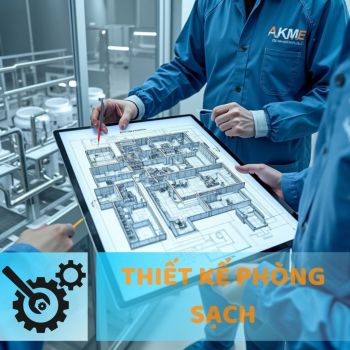
Cleanroom Design and Construction
14:05 - 11/03/2025 24915
GMP and ISO Standard Cleanroom Construction
14:18 - 11/03/2025 13833
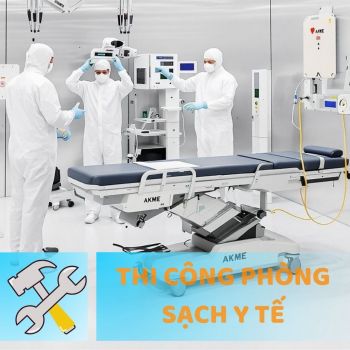
ISO Standard Medical Cleanroom Construction
14:13 - 28/02/2025 25224
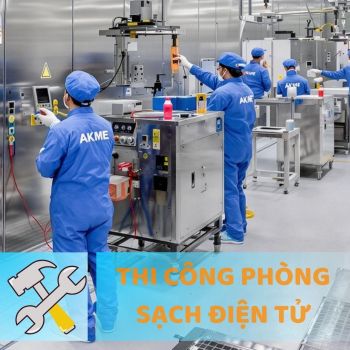
Electronics Cleanroom Construction

16:15 - 18/03/2021 7675
Warranty Service
16:26 - 28/11/2019 21070
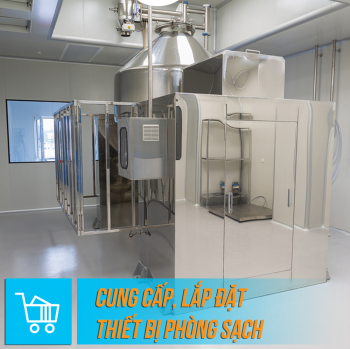
Supply and installation of cleanroom equipment

14:50 - 26/11/2019 7391
Technology Production Line Consulting
16:35 - 19/03/2025 20948