


EN 1822 Standard: Classification and Evaluation of the Latest HEPA H13, H14, and ULPA Filters
10:24 - 11/03/2026 1393
Latest 2026 Update on ISO 14644 and TCVN 8664 Standards
Sterile Material Transfer Systems for Isolators/RABS.
English translation: “Why Is 2026 the Boom Time for Cleanroom Investment in Vietnam?”
Sustainability in cleanrooms.
EN 1822 is a European standard recognized worldwide for testing, evaluating, and classifying high-efficiency air filters, including EPA, HEPA, and ULPA filters. In today’s high-tech B2B cleanroom projects, understanding and applying EN 1822-compliant filtration configurations is a fundamental requirement for helping central HVAC systems achieve particle control limits and optimize equipment life-cycle costs.
1. Current EN 1822 Standard
The EN 1822 standard is widely applied as one of the most reliable technical references for classifying absolute filters. The core of this standard lies in determining filtration efficiency based on the Most Penetrating Particle Size (MPPS). Unlike older testing methods, EN 1822 provides a precise and transparent benchmark for contractors, design consultants, and project management teams to assess air-handling performance in demanding cleanroom applications.
2. EN 1822 Requirements for HEPA and ULPA Filters
2.1. Scope of Application
The EN 1822 standard specifies system testing methods and performance requirements for static filtration grades. Its scope covers EPA (Efficiency Particulate Air), HEPA (High Efficiency Particulate Air), and the highest level, ULPA (Ultra Low Penetration Air). These technical parameters are used as design benchmarks directly linked to industries requiring ultra-sterile environments, such as GMP pharmaceutical manufacturing, semiconductor microchip production, microsurgical medical systems, and biotechnology.
2.2. Classification System (Related ISO Classes – HEPA H13, H14, and ULPA)
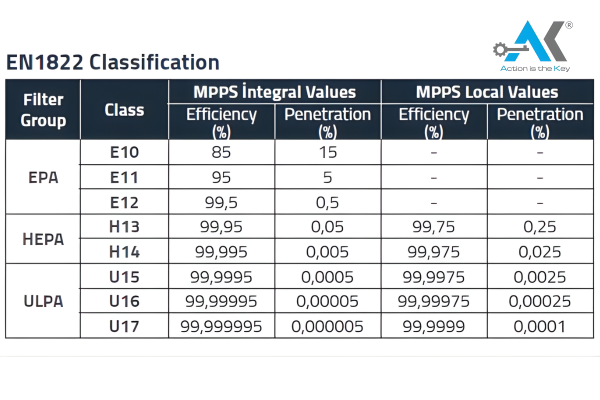
The standard classifies filters into specialized grades based on the minimum particle retention efficiency threshold:
- HEPA H13 filters: Must achieve at least 99.95% efficiency at MPPS. This is the most common filter configuration, suitable for most medium- to high-grade cleanroom environments such as pharmaceutical compounding and primary packaging areas.
- HEPA H14 filters: Provide significantly higher filtration efficiency, reaching 99.995% at MPPS. This performance level makes H14 filters essential for high-biosafety microbiology facilities such as BSL-3 areas, as well as optical and specialty component manufacturing plants.
- ULPA filters (U15 - U17): Offer extremely high filtration efficiency, ranging from 99.9995% for U15 up to 99.999995% for U17. This product range is designed for ultra-clean environments such as nanometer-scale microprocessor production, where even a single ultrafine particle entering the system can cause catastrophic failure across the entire line.
2.3. Sampling and Evaluation Method (MPPS)
The most significant breakthrough of EN 1822 lies in its MPPS (Most Penetrating Particle Size) scan-counting method. Studies have shown that instead of measuring only at a fixed 0.3 µm particle size, MPPS identifies the most critical particle size range, typically from 0.12 µm to 0.25 µm, which is the range most likely to penetrate the filter under a specified test airflow velocity. Each filter must undergo a local leak scan test across the entire media surface and gasket frame to confirm that no micro-leak points are present.
2.4. Test Reporting
Every specialized filter manufactured in accordance with EN 1822 must be supplied with an individual test report linked to its serial number. This report confirms parameters such as the specified test airflow rate, pressure drop across the media, reference MPPS size, actual measured efficiency, and the final filter class achieved, such as H13, H14, or U15. For large-scale projects, this forms a key part of the legal and technical documentation package required for cleanroom validation activities, including IQ and OQ, before production approval.
3. Applying the Standard in Real Projects at Anh Khang Cleanroom
In practice, selecting the wrong HEPA filter grade against EN 1822 standards can lead to two major financial risks: either the system fails validation from the start because it is not safe enough, or it becomes over-specified and increases energy consumption due to the higher static resistance imposed on AHU or FFU fans.
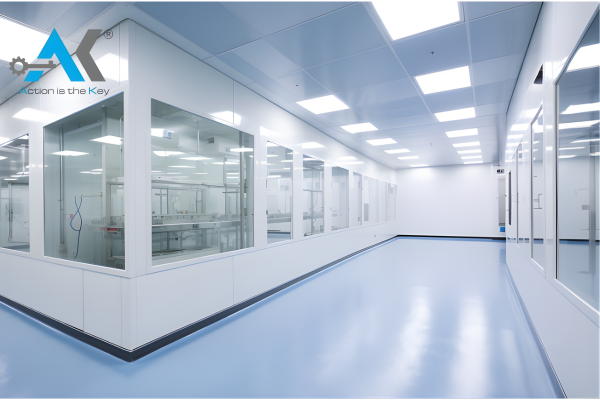
In a real HVAC consulting and construction project for a sterile infusion drug production line operating at the highest clean grade, Grade A under EU GMP, Anh Khang Cleanroom’s highly experienced engineers relied closely on EN 1822 data to design the airflow scheme. After determining that using H13 filters throughout the entire area could create a contamination risk from ultrafine particles at terminal supply outlets directly above the production line, Anh Khang Cleanroom recommended applying H14 filters at all critical core-area supply air positions, combined with tightly controlled airlock pressure differentials.
Thanks to this balanced technical decision, Anh Khang Cleanroom not only helped the investor pass the most stringent regulatory inspections smoothly, but also restructured the filter replacement cycle, reduced airflow resistance pressure loss, and saved more than 15% in long-term monthly energy consumption for the central AHU system.
Establishing and maintaining a flawless cleanroom environment begins with a thorough understanding of the EN 1822 design standard. For businesses planning factory upgrades, identifying the right equipment configuration should be based directly on accurate standards analysis and real project experience. To update current filter requirement documents and receive the most suitable evaluation plan for aerodynamic compliance tailored to a specific production line, management teams can directly contact the experts at Anh Khang Cleanroom. Finding the perfect technical balance between multi-stage filtration technology and investment cost is the strongest assurance of long-term success for any production system.
 | ANH KHANG CLEANROOM M&E JOINT STOCK COMPANY Hotline: 1900 636 814 - 0902 051 222 Email: info@akme.com.vn Website: akme.com.vn Address: Lot B7 - Xuan Phuong Garden - Trinh Van Bo Street - Xuan Phuong Ward - Hanoi |

12:05 - 28/11/2019 49239
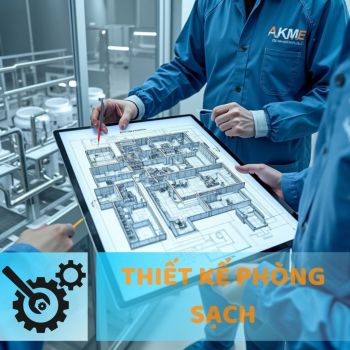
Cleanroom Design and Construction
14:05 - 11/03/2025 24795
GMP and ISO Standard Cleanroom Construction
14:18 - 11/03/2025 13629
ISO Standard Medical Cleanroom Construction
14:13 - 28/02/2025 25080
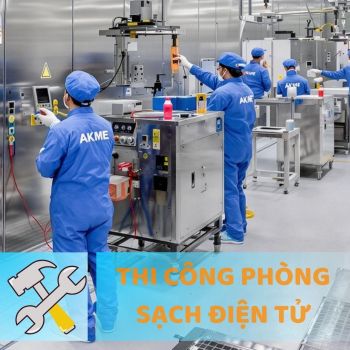
Electronics Cleanroom Construction

16:15 - 18/03/2021 7504
Warranty Service
16:26 - 28/11/2019 20905
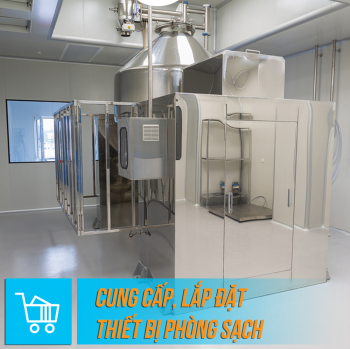
Supply and installation of cleanroom equipment

14:50 - 26/11/2019 7233
Technology Production Line Consulting
16:35 - 19/03/2025 20859