


What is a CAV system? Principles and Applications in HVAC
15:48 - 13/04/2026 1043
Learn about the Constant Air Volume (CAV) system. Discover its operating principles, classification, and a comparison between CAV and VAV with expert Anh Khang Cleanroom.
Position air return grilles to optimise airflow control in the cleanroom.
Innovating airlock technology – off-site fabrication and field assembly to ensure a seamless transition when entering and exiting sterile environments.
Decoding Raised Floors in Cleanrooms for Electronics Manufacturing Plants
The importance of cleanroom lighting
☰ Table of Contents
- 1. Understanding What a CAV (Constant Air Volume) System Is
- 2. Dissecting the Operating Principle of a CAV System
- 3. Classification of CAV Systems Commonly Used in Cleanroom Construction
- 4. Advantages and Limitations of the CAV System
- 4.1. Technical Advantages
- 4.2. Limitations
- 5. Practical Applications in Industry
- 6. Affirming Anh Khang's Position as an Electromechanical Refrigeration Expert
Operating cleanrooms and industrial manufacturing plants always requires strict control over environmental parameters. However, many investors today are facing headaches with temperature imbalances or unstable pressure in isolated functional zones.
If the supply airflow fails to maintain uniformity, the risk of cleanroom cross-contamination will occur, violating strict standards like ISO 14644, TCVN 8664, or GMP. This not only causes direct damage to the production batch but also leads to increased maintenance costs.
To thoroughly solve this problem, the CAV (Constant Air Volume) system is the essential operational "key". So what exactly is CAV and what are its operating principles? Let's analyze this solution in depth with the expert engineering team at Anh Khang Cleanroom right below.
1. Understanding What a CAV (Constant Air Volume) System Is
The CAV system (short for Constant Air Volume) is an air distribution mechanism belonging to the HVAC (Heating, Ventilation, and Air Conditioning) system. True to its name, the core feature of this solution is to provide a fixed airflow volume into a space continuously throughout the operation process.
Instead of changing the air volume, the system will automatically adjust the temperature of the airflow to accurately meet the cooling or heating needs of that area. Due to its stable and easy-to-control nature, this equipment is prioritized for integration into spaces with simple climate requirements but demanding high reliability.
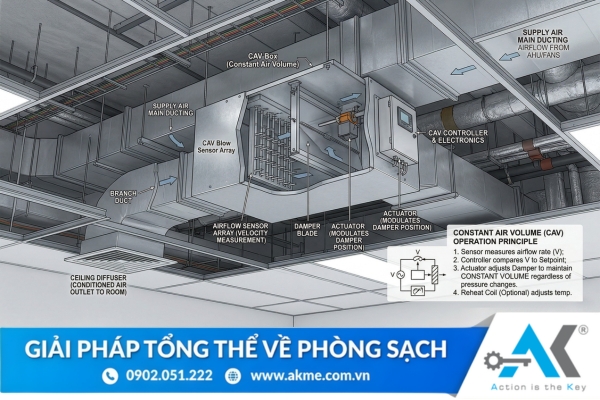
2. Dissecting the Operating Principle of a CAV System
Completely different from variable air volume variants, the CAV system operates on the principle of "Constant volume - Variable temperature". When the sensor detects that the space needs additional cooling or heating, the system will not increase the fan speed but only change the capacity at the heater or cooling coil.
The basic structure constituting a technically standard CAV station includes:
- Thermostat: Senses and commands to fine-tune the supply air temperature.
- Blower/Fan system: Ensures a constant airflow volume continuously moving through the ductwork system.
- Heating/Cooling Coil unit: Responsible for changing the thermodynamic state of the airflow before pushing it into the room.
3. Classification of CAV Systems Commonly Used in Cleanroom Construction
Based on the project's zoning requirements, electromechanical refrigeration engineers usually divide this equipment into 2 main types:
- Single-zone CAV: Supplies a constant volume of air at the same temperature to a single space. Suitable for small lab rooms, pharmaceutical storage warehouses, or independent production areas.
- Multi-zone CAV: Serves multiple areas within the same factory complex. Although the total airflow volume is kept constant, the supply temperature to each room can be customized through reheat coils placed at each duct branch.
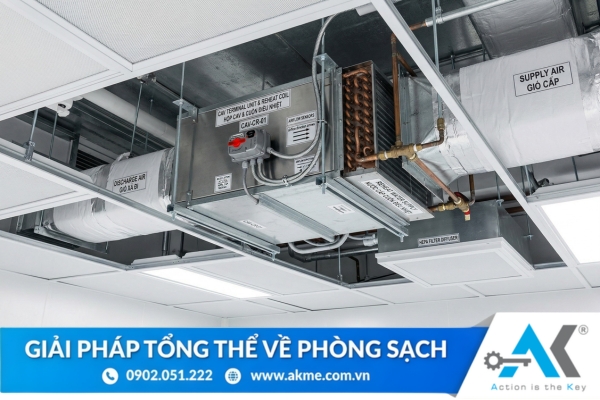
4. Advantages and Limitations of the CAV System
To evaluate feasibility before designing, the investor needs to clearly understand the technical characteristics of the system.
4.1. Technical Advantages
- Compactness: Simple structural design minimizes the risk of mechanical failure during operation.
- Initial budget optimization: Equipment procurement and installation costs are much lower compared to systems requiring complex inverters.
- Maintaining stable pressure: Supplying a fixed airflow volume makes it easy for the cleanroom to maintain positive/negative pressure according to the design, effectively preventing cross-contamination.
4.2. Limitations
- Energy consumption: Because the fan always runs at a fixed capacity, the system cannot self-reduce the load to save electricity when the room's cooling demand drops low.
- Difficulty meeting super-large spaces: Inflexible for factory complexes with a high degree of temperature fluctuation or constantly changing heat loads generated from machinery.
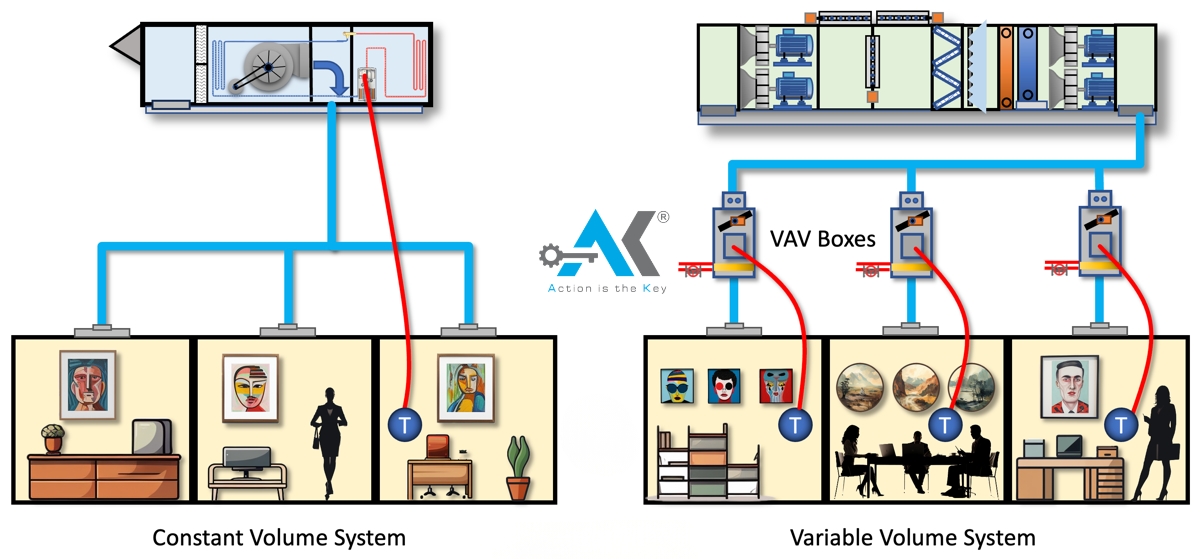
5. Practical Applications in Industry
With high reliability, the CAV Box is widely applied in:
- Medical device and pharmaceutical manufacturing cleanrooms (where strict room pressure control is needed).
- Chemical mixing areas and testing laboratories.
- Small and medium-sized electronic factories with steadily generated heat loads.
6. Affirming Anh Khang's Position as an Electromechanical Refrigeration Expert
The choice to use a constant or variable volume platform not only depends on the budget but also directly determines the operational standards of the entire factory. A wrong decision in airflow design can lead to serious consequences in quality management and long-term energy waste.
With a team of highly experienced engineers, Anh Khang Cleanroom is proud to bring cooling load calculation solutions, airflow simulation, and international standard HVAC system construction. We do not just provide equipment but also hand over sustainable technological solutions, ensuring all production spaces of the enterprise always operate in the most perfect state.
ANH KHANG CLEANROOM M&E JOINT STOCK COMPANY
- Hotline: 1900 636 814 - 0902 051 222
- Email: info@akme.com.vn
- Website: akme.com.vn
- Address: Lot B7 - Xuan Phuong Garden - Trinh Van Bo Street - Xuan Phuong Ward - Hanoi

12:05 - 28/11/2019 49372
Cleanroom Design and Construction
14:05 - 11/03/2025 24891
GMP and ISO Standard Cleanroom Construction
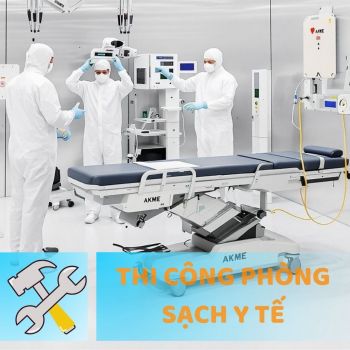
14:18 - 11/03/2025 13772
ISO Standard Medical Cleanroom Construction
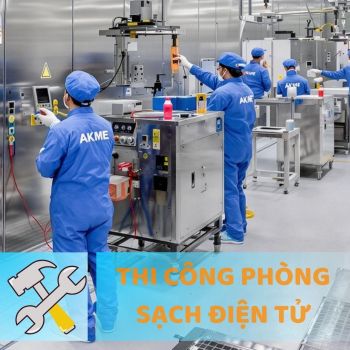
14:13 - 28/02/2025 25190
Electronics Cleanroom Construction

16:15 - 18/03/2021 7635
Warranty Service
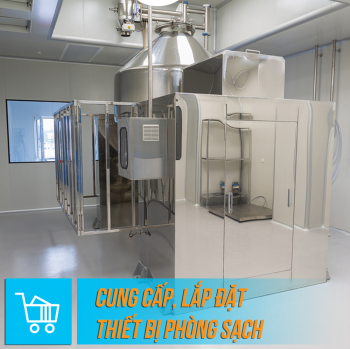
16:26 - 28/11/2019 21034
Supply and installation of cleanroom equipment

14:50 - 26/11/2019 7359
Technology Production Line Consulting
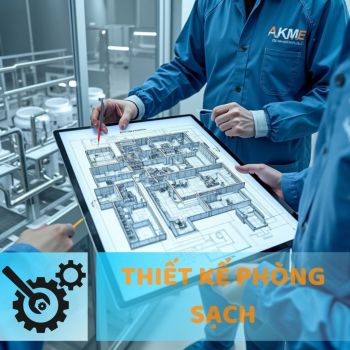
16:35 - 19/03/2025 20923