

Selection of Cleanroom Disinfectants
15:28 - 18/11/2025 668
EN 1822 Standard: Classification and Evaluation of the Latest HEPA H13, H14, and ULPA Filters
Latest 2026 Update on ISO 14644 and TCVN 8664 Standards
Sterile Material Transfer Systems for Isolators/RABS.
English translation: “Why Is 2026 the Boom Time for Cleanroom Investment in Vietnam?”
☰ Table of Contents
- 1. The Importance of Disinfectants in Cleanrooms
- 2. Criteria for Selecting Disinfectants
- 3. Validating Disinfectant Effectiveness
- 4. Disinfectant Rotation Strategy
- 4.1. Key steps for establishing an effective rotation program
- 5. Understanding and Managing Disinfectant Residues
- 5.1. Effective residue management measures
- 6. Spray or Wipe: Which Method Is Better?
- 7. Criteria for Choosing a Disinfectant Supplier
- 8. Conclusion
The Importance of Disinfectants in Cleanrooms
Disinfectants are chemical agents capable of significantly reducing the number of microorganisms present in a given area. Even if a cleanroom is equipped with the most advanced technology and follows strict sanitation procedures, it may still fail to meet the required cleanliness standards if appropriate disinfectants are not used.
Different disinfectants have distinct characteristics in terms of spectrum of activity, mode of action, and effectiveness. Some disinfectants are effective only against actively growing Gram-positive and Gram-negative bacteria, while others are also capable of eliminating fungi. For this reason, understanding the characteristics of each type of disinfectant is the first step toward making the right selection.
Criteria for Selecting Disinfectants
When selecting disinfectants for a cleanroom, you should consider the following factors:
- Broad spectrum of activity: The disinfectant should be capable of eliminating a wide range of microorganisms, from bacteria to fungi and other pathogens.
- Sporicidal capability: Some applications require a disinfectant that can kill microbial spores, which are extremely resilient and difficult to eliminate.
- Speed of action: An ideal disinfectant should have a contact time of less than 10 minutes to achieve optimal disinfection performance.
- Different modes of action: When using multiple disinfectants in a rotation program, each one should have a different mode of action to avoid selecting for resistant organisms.
- Surface compatibility: Not all disinfectants are suitable for every type of surface in a cleanroom. Compatibility should be carefully checked before use.
- Residue handling: Disinfectants will leave residues on surfaces. It is important to understand how to manage these residues to avoid affecting cleanroom performance.
- Product format and cost: You should weigh product type (ready-to-use or concentrated), application method (spray or wipe), and cost in order to choose the solution that best fits your budget.
- Regulatory compliance: The disinfectant should be registered under the Biocidal Products Regulation (BPR) to ensure compliance with legal requirements.
Validating Disinfectant Effectiveness
Using validated disinfectants is a mandatory requirement for maintaining hygiene in cleanrooms. Disinfectants can be tested according to recognized international standards to assess their effectiveness against bacteria, fungi, and spores.
Some important standards that disinfectants should meet include:
- EN1276: Test for the bactericidal activity of chemical disinfectants
- EN1650: Quantitative test for fungicidal activity
- EN13697: Quantitative surface test to evaluate bactericidal or fungicidal activity
- EN13704: Quantitative test for sporicidal activity
Selecting disinfectant products that have been validated to these standards will give you greater confidence in their quality and effectiveness.
Disinfectant Rotation Strategy
One of the most important aspects of designing a cleanroom cleaning process is implementing the rotation of different disinfectants. This is not done to prevent microorganisms from becoming resistant in the pharmaceutical sense, but rather to prevent the natural selection of tolerant organisms.
When rotating disinfectants, you must ensure that each change involves a change in the fundamental mode of action. For example, you should rotate quaternary ammonium disinfectants with other agents that have different mechanisms of action, rather than simply switching brands or concentrations.
Key steps for establishing an effective rotation program:
- Assess the operating conditions of the cleanroom
- Analyze environmental monitoring data to understand microbial trends
- Always rotate the core chemical types, not just the brand names
- Integrate a sporicidal agent into the rotation program
- Start with the highest requirements, then adjust based on monitoring data
Understanding and Managing Disinfectant Residues
Wherever a disinfectant or biocide is used, residues will remain. Understanding how much disinfectant residue is left on a surface is the key to applying effective removal methods.
In cleanrooms, where air change rates are high, water-based disinfectants dry quickly. However, residues can cause problems such as sticky surfaces, trapped dust, and reduced effectiveness of other disinfectants if they are not properly managed.
Effective residue management measures:
- Select low-concentration but highly effective disinfectants
- Regularly remove residues with a detergent before and/or after using disinfectants
- Use alcohol to remove residues after cleaning activities are completed
- Use highly purified water or WFI (Water for Injection) to remove residues
- Follow the recommended wet contact time
- Ensure that surfaces are completely dry before starting cleanroom operations
Spray or Wipe: Which Method Is Better?
To achieve the best disinfection performance, microorganisms must remain in contact with the disinfectant for the recommended amount of time. Recent studies show that combining spraying and surface wiping can significantly improve contamination control. Wiping helps mechanically remove surface contaminants and enhances the effectiveness of the disinfectant.
Today, disinfectant-impregnated wipe or mop systems are available on the market, but sporicidal versions are still relatively rare. Modern solutions such as burstable bag systems can preserve the integrity and effectiveness of both the wipes and the disinfectant or sporicidal agent until the moment of use.
Criteria for Choosing a Disinfectant Supplier
Choosing the right disinfectant supplier is just as important as choosing the product itself. Anh Khang Cleanroom is a trusted provider of contamination control solutions for cleanrooms, offering professional products and services that meet international standards.
When selecting a supplier, you should consider:
- Product availability and the ability to deliver quickly
- Compliance with EU GMP and CLP standards
- Confirmation of registration under the Biocidal Products Regulation
- The ability to provide technical support and tailored advice for the specific needs of your cleanroom
- Service quality and fast responsiveness when needed
ANH KHANG’s Perspective
Selecting the right disinfectant is a complex balancing process involving effectiveness, safety, compatibility, cost, and ease of use. To optimize cleanroom performance, you need to carefully consider all of the factors above, implement a suitable disinfectant rotation strategy, and work with trusted suppliers such as Anh Khang Cleanroom to ensure that your cleanroom consistently operates at its highest level of performance.
 | ANH KHANG CLEANROOM M&E JOINT STOCK COMPANY Hotline: 1900 636 814 - 0902 051 222 Email: info@akme.com.vn Website: akme.com.vn Address: Lot B7 Xuan Phuong Garden, Trinh Van Bo Street, Phuong Canh Ward, Nam Tu Liem District, Hanoi. |

12:05 - 28/11/2019 49425
Cleanroom Design and Construction
14:05 - 11/03/2025 24915
GMP and ISO Standard Cleanroom Construction
14:18 - 11/03/2025 13833
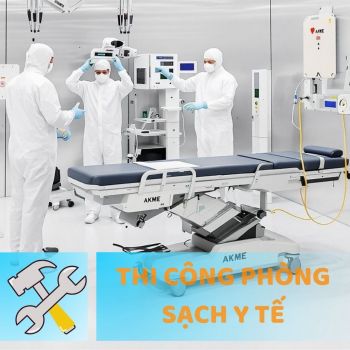
ISO Standard Medical Cleanroom Construction
14:13 - 28/02/2025 25224
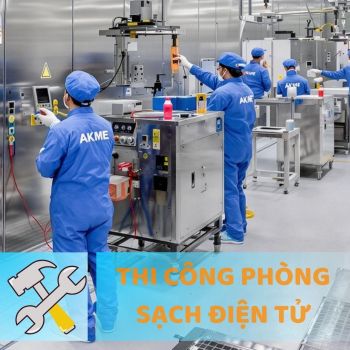
Electronics Cleanroom Construction
16:15 - 18/03/2021 7675
Warranty Service
16:26 - 28/11/2019 21070
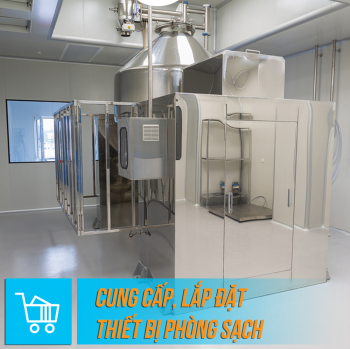
Supply and installation of cleanroom equipment

14:50 - 26/11/2019 7391
Technology Production Line Consulting
16:35 - 19/03/2025 20948